
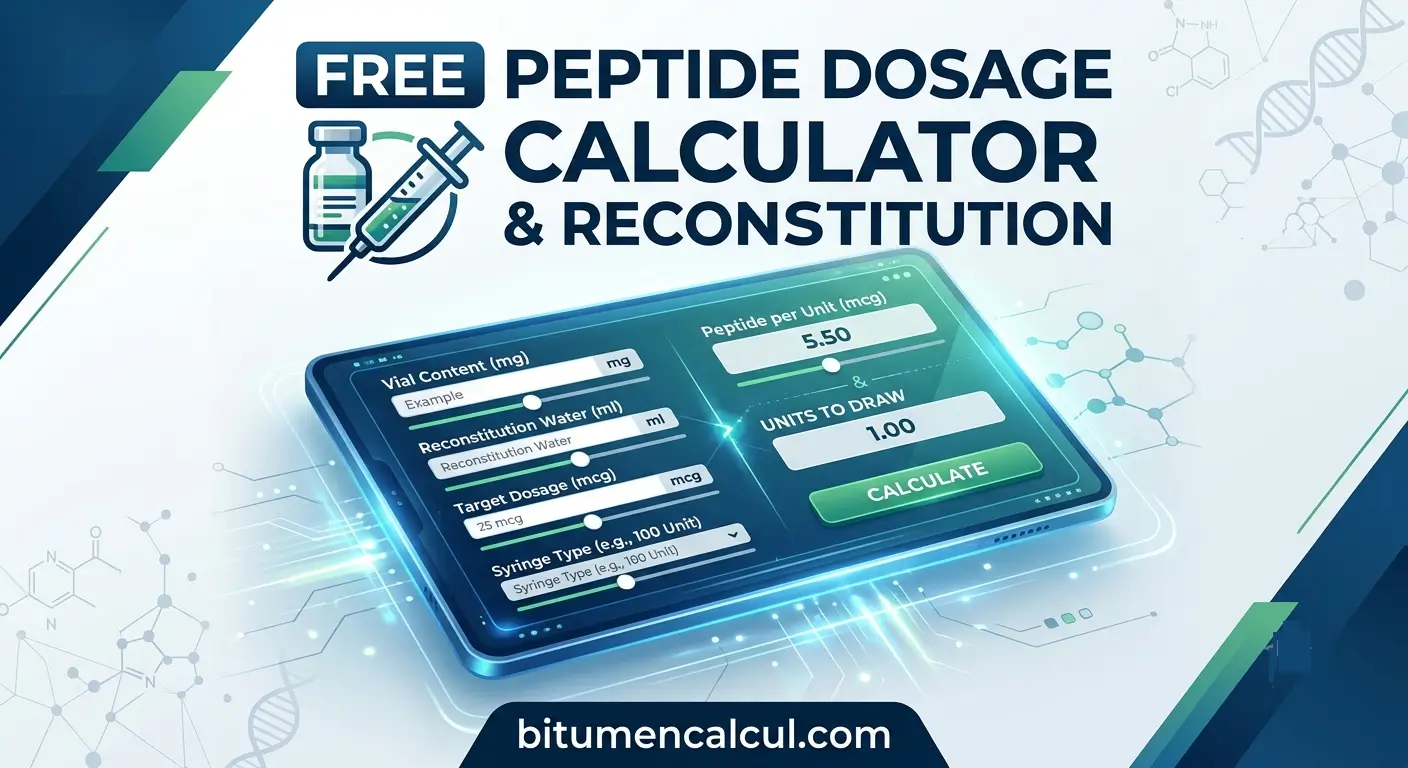
Free Peptide Dosage Calculator & Reconstitution
Peptide Dosage Calculator
Enter your vial size, the amount of bacteriostatic water you add, and your desired dose to see exactly how many units to draw on your syringe.
Draw to
0 units
0 mL
Concentration
–
Peptide per syringe unit
–
Total doses per vial
–
Vial lasts about
–
This calculator performs unit conversions and arithmetic only. It is for informational purposes and is not medical advice. Always confirm your dose, reconstitution volume and injection technique with a qualified healthcare professional.
Researchers with peptides know accurate dosage means success. Precision measuring micrograms and determining concentration isn’t merely protocol it’s truly essential. The calculator transforms complexity into confidence, converting theoretical milligrams into practical units your syringe delivers.
Reconstitution demands understanding bacteriostatic water, vials, and dilution. Practitioners recall mistakes miscalculating formulas or misreading unit marks. This calculator eliminates guesswork by showing how milligrams dissolve into solution, enabling researchers to inject with unwavering precision.
How To Calculate Peptide Dosage
Calculating peptide dosage demands grasping three fundamental variables: the peptide strength in milligrams, bacteriostatic water volume, and your target dose in micrograms. This reliable tool accurately calculate the precise syringe units needed for research purposes.
Most practitioners stumble not with math, but comprehension they conflate syringe units with actual micrograms. That’s where accurate results emerge: understanding that draw volume changes based on dilution ratio. The calculator handles arithmetic instantly, preventing the reconstitution mistakes that compromise research integrity and require starting anew.
Step-By-Step Instructions
Before reconstitution begins, your environment demands absolute commitment to sterility. Clean your workspace thoroughly, Wipe surfaces with alcohol, and ensure all materials peptide vial, bacteriostatic water vial, syringe sit prepared. This foundational step determines whether you’ll achieve accurate results or face contamination that invalidates your entire protocol.
Draw water first using your syringe, then Pull the prescribed volume of bacteriostatic water carefully. Add water slowly by tilting the peptide vial at a 45-degree angle, allowing liquid to run along the interior wall rather than blasting the powder directly. Swirl gently never shake hard until the powder dissolves completely into solution for your research.
Setup Guide
The Peptide Dosage Calculations process begins with understanding your vial’s contents and desired endpoint simultaneously. Rather than following linear steps, experienced researchers reverse this: know your target dose first, then determine what bacteriostatic water volume and peptide strength combination serves your research protocol. This non-linear approach prevents wasteful reconstitution mistakes before they occur.
Select parameters within the calculator, enter your peptide strength, specify bacteriostatic water amount, and input your target dose in either mcg or mg units the online tool handles conversion seamlessly. Once complete, the interface reveals your exact syringe units marking, your injection amounts, and confidence that your administration matches research specifications precisely and reliably.
PEPTIDE AND SOLVENT PREPARATION
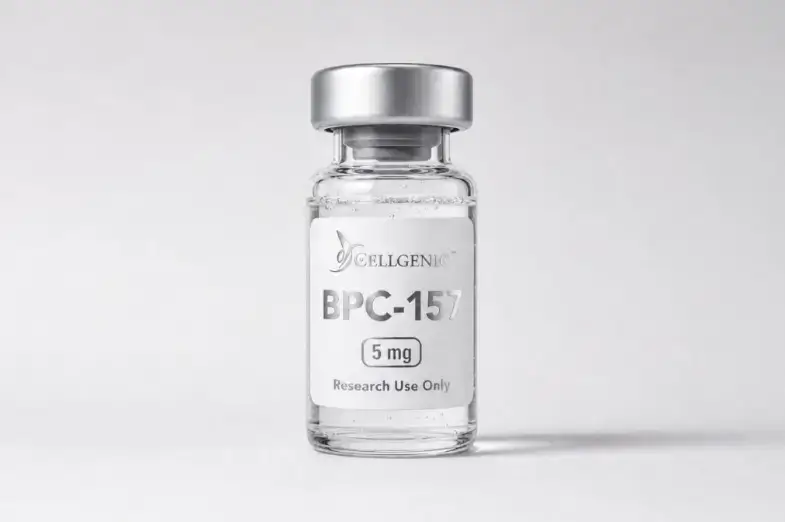
Peptide reconstitution demands careful selection of your solvent. Absolute sterility isn’t negotiable maintaining sterility requires thoroughly washing hands, donning protective gloves, ensuring your workspace stays impeccably clean. Your research work depends on these foundational preparations.
Temperature management proves critical before beginning. Bring to room temperature all solutions that were still cold cold materials interfere with proper reconstitution process. This detail significantly impacts results when adding solvent to the peptide vial.
Carefully remove the metal cap first, then disinfect the upper surface with an alcohol swab this step remains crucial. Lyophilized peptide vials demand meticulous attention. Integrity depends on maintaining sterility throughout your entire reconstitution procedure.
Precise handling matters when adding solvent. Use sterile syringe to carefully withdraw required amount of bacteriostatic water, then slowly inject into peptide vial. Tilt at 45°; solvent gently runs down, minimizing bubbles and foam formation.
Example: Calculating Your Peptide Dose
When you assume a 5mg peptide strength scenario and decide to add 3mL bacteriostatic water, your goal becomes crystal clear. For anyone planning to inject a research subject with 250 mcg doses, understanding this setup matters. The peptide amount you’re working with determines everything downstream. Set your dose expectations realistically before proceeding with actual preparation.
Enter your parameters thoughtfully the 250mcg target equals 0.25mg in conventional measurement. This desired research dose means each dose must contain exactly 250mcg peptide. When you specify these numbers into your system, the calculator accurately reflects what’s needed. I’ve observed practitioners stumbling when they don’t clarify their dosing intention upfront, causing downstream confusion during actual administration phases.
The mathematics behind this reveals how 5mg peptide dissolved in 3mL water equals approximately 1.67mg/mL concentration. Since 5mg equals 5000 mcg, you’ll need to draw 0.15mL precisely 15 units to achieve your 250 mcg dose. The visual meter will show you exactly where that 15 units mark sits on your syringe, since 1mL equals 100 units on standard insulin syringes used in research applications.
Consult reliable tools to determine amount of bacteriostatic water required before you dilute anything. I’ve watched professionals verify calculations three times to avoid costly mistakes. The Bac Water Calculator helps tremendously here. What truly distinguishes experienced researchers is their systematic approach they check every variable methodically rather than rushing toward injection protocols prematurely.
Common Reconstitution Ratios / Example Peptide Formulations
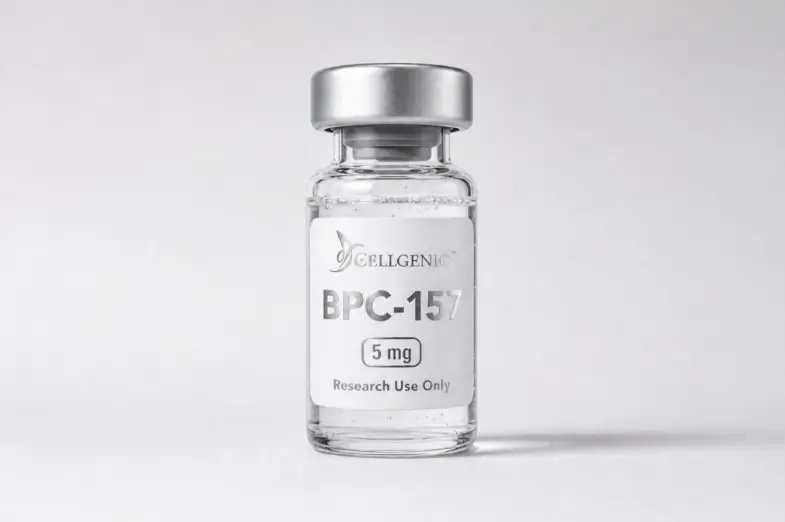
When working with BPC-157, practitioners typically reconstitute 5 mg in 2 mL of bacteriostatic water, achieving a concentration of 2.5 mg/mL. This formulation allows precise dosing at 250 mcg per injection, with standard administration requiring 10 units on an insulin syringe. The flexibility of this ratio accommodates both research protocols and individualized therapeutic approaches effectively.
TB-500 represents a more concentrated approach at 10 mg dissolved in 3 mL of solution, yielding 3.3 mg/mL. Standard protocols involve administering 2 mg initially, though some practitioners utilize 60 units for measurable immunomodulatory effects. This particular ratio has gained recognition among experienced users for its tissue-healing properties and broader systemic applications in recovery protocols.
The secretagogue category demands precise calibration: Ipamorelin at 5 mg with 2 mL provides 2.5 mg/mL concentration, dosable at 200 mcg increments using 8 units. Meanwhile, CJC-1295 requires only 2 mg in 2 mL for a 1 mg/mL solution with 100 mcg dosing precision via 10 units. Each peptide’s formulated ratio reflects individual potency distinctly.
Sermorelin follows similar parameters to Ipamorelin at 5 mg with 2 mL, maintaining 2.5 mg/mL concentration and 200 mcg dosing via 8 units. Tesamorelin stands distinctly apart at 10 mg in 2 mL, achieving 5 mg/mL substantially higher concentration requiring 1 mg per administration with 20 units. These specific formulations demonstrate notably varied potency effectively.
ADDITIONAL INFORMATION DISCLAIMER
This calculator serves informational purposes exclusively and does not constitute medical advice. The tool merely converts dosages already determined by qualified professionals into syringe units for measurement accuracy. Users must secure explicit confirmation from their licensed provider regarding target dose appropriateness and protocol specifics. We cannot establish individual dose determinations; clinician guidance remains essential for safe implementation and therapeutic success.
This online tool is designed exclusively for research purposes and does not replace professional medical consultation. Researchers and scientists utilizing our calculator acknowledge personal responsibility for understanding peptide properties and handling procedures. The easy-to-use interface simplifies mathematical conversions only, never determining medical necessity or appropriateness. All determinations regarding peptide suitability require competent licensed provider oversight and comprehensive evaluation of individual circumstances and research protocols.
Proper storage following reconstitution directly impacts peptide stability and effectiveness; users must maintain temperature controls between +4°C and -20°C based on timeline requirements. Repeated cycles of freezing and thawing compromise peptide integrity; exercise disciplined storage discipline. We offer expert guidance alongside our calculation resources to help researchers achieve success. Instructions provided here remain intended for informational clarity only; always defer to licensed provider or institutional review requirements.
Bacteriostatic water serves as standard solvent for peptide reconstitution; never substitute without professional authorization. Human consumption remains strictly forbidden; all applications must occur within authorized research environments under appropriate supervision. Side effect possibilities warrant careful review with healthcare providers before beginning any program. Our commitment involves furnishing accurate calculation tools while emphasizing that competent medical oversight remains non-negotiable for responsible, safe peptide utilization.
FAQs
Conclusion
A reliable peptide calculator makes peptide dosage calculations faster, simpler, and more accurate by converting vial strength, BAC water volume, and target dose into precise syringe units. Whether you’re performing peptide reconstitution, calculating retatrutide dosage, or determining the correct dilution ratio, using an accurate calculator helps minimize errors, improve consistency, and support safer research practices. Always verify your calculations and follow qualified professional guidance before preparing or administering any peptide.