Fuel Cost Calculator – Free, Instant & Accurate Results
Fuel Cost Calculator
Work out how much fuel and money your trip will cost.
One-way distance of your trip.
Total fuel cost
Total distance
Fuel needed
Cost per km
Estimate based on the efficiency and fuel price you entered. Real consumption varies with driving style, traffic, load and road conditions.
A fuel calculator transforms hidden costs into visible insight. Mileage across months affects vehicle budgets. Drivers using calculations discover uncomfortable realities about journey spending. This empowers informed budgeting decisions and reshapes understanding of transportation expenses.
UK motorists rarely track fuel prices systematically. Petrol costs vary by location. A fuel calculator examines cost patterns tied to vehicle type and mileage, revealing how destination proximity impacts total journey expenditure effectively and practically.
How To Use The Calculator - Step By Step
Select your vehicle type and fuel type (petrol, diesel, or LPG). Enter your MPG from records. Choose your vehicle from the dropdown. Calculator now estimates fuel costs for your journey.
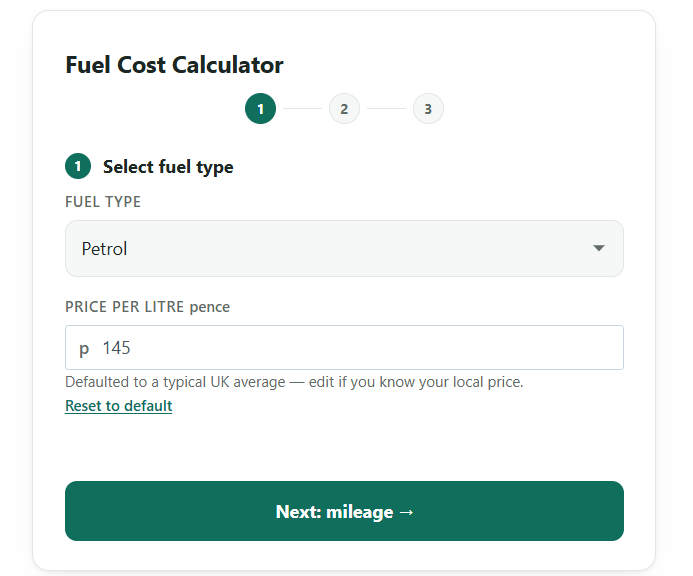
Input the total miles planned for your journey. Enter current fuel price per litre in pence. The calculator automatically computes your total fuel costs precisely based on MPG and distance.
Review displayed results showing total fuel cost, gallons or litres required, and journey expense breakdown. Compare against your budget. Export or share your fuel costs data with friends planning long distances.
Fuel Cost Calculator / Journey Cost Calculator
Fuel Cost Calculator
Fuel spending demands scrutiny. Rather than guesswork, comparison reveals truth. Fuel type selections petrol, diesel, LPG vary significantly. A browser calculator using dropdowns with UK average rates transforms budgeting into precise cost understanding of driving.
Planning trips reveals costs. Miles multiply expenses when vehicle efficiency unknown. Relatives question why fuel feels expensive. Investigation through rate analysis across LPG, petrol, diesel provides clarity. Free calculator information enables comparative decisions before long distances deplete budget.
Journey Cost Calculator
Journey planning demands precision. Cost matters calculating miles and fuel. Spending depends on MPG, fuel type, rate. Vehicle selection petrol, diesel, LPG shapes budget. Free calculator tools help city break travelers compare realistic costs beforehand.
Accuracy transforms trip planning. Popping shops without budget causes unplanned spending. Entering vehicle details, MPG, fuel type reveals real idea. Months of budgeting gain structure through comparison of petrol, diesel, LPG rates against actual mileage.
Understanding Results / Fuel Cost Results
Your fuel cost results display breakdowns across week, month, year intervals. The calculator reveals how vehicle MPG influences total journey spending. These estimated expenses help understand financial impact of driving patterns and personal mileage management.
Understanding price per litre shows why fuel stations differ from supermarkets. Data set analysis highlights potential savings across long distances. The tool clarifies how retail versus wholesale pricing impacts fill vehicle costs and budgeting strategy.
Required Fuel Calculation
Understanding your vehicle's fuel requirements begins with precisely knowing the distance of your journey. Fuel consumption depends entirely on MPG and total miles covering your complete route. By calculating these critical variables systematically, you accurately determine the given pattern and plan all travel needs efficiently.
Most drivers overlook how estimated consumption rates vary based on terrain covering your journey. Your vehicle's efficiency changes significantly when considering highway versus city driving patterns. The calculate must account for variations in MPG when determining actual fuel demand for total distance and miles traversed.
Given parameters must reflect real scenarios, not theory for your journey planning. Experience shows vehicle performance varies considerably. Calculate with conservative estimated figures; knowing actual MPG guarantees sufficient fuel reserves. Distance extends beyond initial miles when covering routes without proper calculation, so verify these methods work correctly throughout.
Real-Life MPG Calculation
To master MPG, you must work out values. This example: fifty miles on two litres petrol yields twenty-five MPG. When monitoring fuel spent versus distance, cost becomes essential. The amount provided determines your efficiency rate.
Practical experience shows drivers ignore pence per litre variations affecting budgets. Small pounds spent poorly waste resources every trip. Calculating cost per miles through tracking reveals surprising patterns. When drivers understand fuel efficiency's financial impact, they become conscious about refueling habits.
Unit Conversion (L/100KM To MPG)
Fuel efficiency differs: MPG measures miles per gallon while L/100KM shows litres per kilometres. This affects vehicle comparison and budgeting. Petrol and diesel perform differently. Your driving patterns influence results. Understanding conversion ensures accurate cost predictions.
Conversion divides MPG by consumption ratios. Vehicles at thirty MPG equal 9.4 L/100KM. European cars use L/100KM; American vehicles prefer MPG. Proper fuel calculator inputs prevent errors. Regional standards differ. Understanding your vehicle's system matters.
Fuel Watch / Fuel Price Monitoring
Real-time fuel tracking reshapes how drivers approach journey expenses today. Monitoring price fluctuations across petrol, diesel, and LPG stations within your location reveals substantial variations. I've observed that wholesale prices shifted dramatically, yet supermarkets often maintained inflated rates longer than independent fuel stations. Understanding these dynamics prevents overspending on your daily driving needs.
Price per litre metrics vary significantly by postcode and vehicle type, affecting monthly budgeting strategies considerably. Through comparing costs across different retailers, conscious drivers identify fair price opportunities systematically. Retail pricing data updates frequently, allowing you to select optimal refuelling locations. This analytical approach transforms fuel consumption from unavoidable expense into manageable, calculated variable through informed calculations.
Average fuel prices demonstrate seasonal patterns worth tracking for long distances planning purposes effectively. Pence per litre increases compound rapidly across weeks and months, impacting overall running costs substantially. Personal experience shows that strategic fuel purchasing during price dips, combined with efficient vehicle maintenance, yields remarkable savings throughout each calendar year systematically.
Fuel Saving Tips
- Most drivers overlook how warm engine efficiency begins before starting your journey. Rather than conventional wisdom about idling, experience reveals that understanding your engine's power relationship to fuel consumption demands really grasping why restarting depletes reserves, making longer single trips strategically superior to several shorter journeys for reduce costs.
- The impact of vehicle weight goes unexamined by many. Heavier cars fundamentally use more fuel because engines must work harder pushing mass forward. Remove unnecessary stuff from your boot tools, equipment, stored items gathering dust then recognize how this practical measure genuinely improves efficiency. Weight reduction isn't theoretical; it's immediately measurable at pumps.
- Plan routes with genuine knowledge of terrain and going conditions beforehand. Lost turns mean extra unnecessary mileage, consuming disproportionate fuel volumes. Study your route in advance, consolidating errands into one longer trip rather than scattered shorter outings. This everyday approach limits wasted movement while building better habits around spatial awareness and intentional driving.
- Tyre pressure monitoring deserves weekly attention low pressure dramatically increases fuel use through rolling resistance. Properly maintained tires represent one of the most overlooked mechanical factors affecting consumption. Check pressure frequently, understanding that temperature fluctuations impact readings throughout the week. This practical measure compounds benefits when combined with regular mechanical maintenance practices.
- Maintain your vehicle rigorously; properly looked after engines perform measurably better. Oil changes, regularly scheduled servicing, and systematic checks ensure your car performs efficiently year-round. A well-maintained machine drives optimally, directly reducing fuel consumption while extending longevity and protecting your investment through preventive care approaches.
- Speed limits exist beyond legal compliance they're fuel efficiency boundaries. Travelling at 80mph increases consumption by approximately 25% compared to 75mph. The Department of Transport research confirms that sensible, slower driving meaningfully improves fuel efficiency. When you stick to reasonable velocities, you naturally resist the habit of faster acceleration patterns consuming excessive fuel reserves.
- Air conditioning represents hidden power drainage during urban driving. Habitually blasting air con forces your engine to work harder, multiplying fuel demands substantially. On moderate temperature days, consider natural ventilation alternatives. This requires behavioral shift acknowledging that seasonal habit around climate control directly impacts what you spend monthly on fuel, creating measurable financial consequences worth addressing proactively.
- Save fuel through intentional journey planning that knows your destination patterns. Every drive becomes an opportunity to minimize unnecessary consumption when you understand routes beforehand. Building awareness around fuel efficiency transforms casual commuting into conscious practice. This mindset shift, combined with mechanical vigilance, creates lasting behavioral changes affecting both environmental impact and personal finances, allowing you to genuinely save money everyday through practical implementation.
Business Mileage & CO2 Emissions
Business mileage calculations demand understanding how vehicle efficiency impacts CO2 emissions directly. Practitioners often miss that driving patterns expose more than consumption metrics; they reveal operational carbon footprint truths embedded within running costs analysis daily.
Mileage rates tied to environmental goals reshape fuel consumption tracking practices. Vehicle mpg data connects with carbon accounting; business operations transform when driving sustainability integrates into expense management, making emissions monitoring an operational standard requirement.
Android App & Alternative Tools
The Android app ecosystem for fuel management has evolved significantly beyond traditional web calculator solutions. Mobile alternatives now available through Google Play offer streamlined interfaces, enabling commuters to accurately track expenditures across different journey types.
Numerous app version iterations have demonstrated varied approaches to fuel cost calculation methodology. From offline capabilities to real-time pricing updates, contemporary mobile options serve diverse user preferences, providing functionality previously restricted to desktop environments.
FQAs
Conclusion
Fuel calculators fundamentally shift how drivers perceive transportation expenses from an inevitable burden into a manageable, data-driven variable. By combining accurate MPG tracking, real-time price monitoring, and practical efficiency strategies from tyre pressure maintenance to route optimization motorists transform casual consumption patterns into conscious financial decisions that ripple across monthly budgets and environmental impact alike. The true power emerges when drivers recognize that understanding fuel costs isn't merely about numbers on a calculator, but about reclaiming control over one of their largest recurring expenses through informed choices and mechanical vigilance.
Read More:
- Best MPG to MPL Converter – Free Online Tool
- Free MPG Calculator – Instant Fuel Economy Check
- Bitumen Calculators – Volume & Weight, Tack Coat (Emulsion), Asphalt Coverage
- Liters to Gallons Converter – Free & Instant (US/UK)
- Free Mileage Calculator – Instant Fuel Cost & MPG
- Free Peptide Dosage Calculator & Reconstitution