Free Breastfeeding Calorie Calculator: Daily Goal
Breastfeeding Calorie Calculator
Estimated Daily Calorie Needs
Determining your exact daily caloric target while nursing can feel overwhelming. A breastfeeding calorie calculator simplifies this process by estimating your unique energy needs whether you are exclusively nursing, managing a combination of feeding methods, or navigating pregnancy alongside lactation.
However, identifying your numerical intake is merely the initial step; the real daily challenge lies in deciding which foods to prepare and consume.
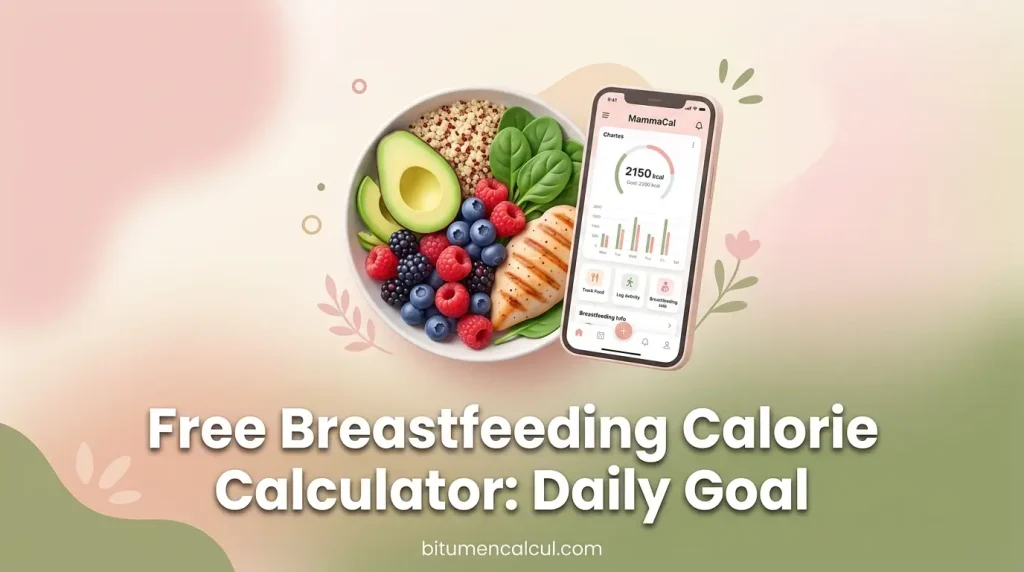
Determining your energy requirements while nursing or expecting does not have to be complicated. This calorie calculator estimates your individual calories while breastfeeding and/or pregnant by applying the Mifflin-St.Jeor Equation a trusted standard utilized by Registered Dietitians in clinical environments. Beyond establishing your baseline intake, it accounts for your activity levels alongside the physiological demands of lactation and gestation, providing a targeted breakdown of your optimal macronutrient balance.
Keep in mind that these figures serve as general guidance rather than guarantees for weight changes or milk production. Additionally, intentional weight reduction is unsafe during gestation, so target weight-loss figures should be disregarded by expectant mothers. Always consult your healthcare professional to confirm the most suitable nutritional goals for your personal situation.
How many calories are in breast milk?
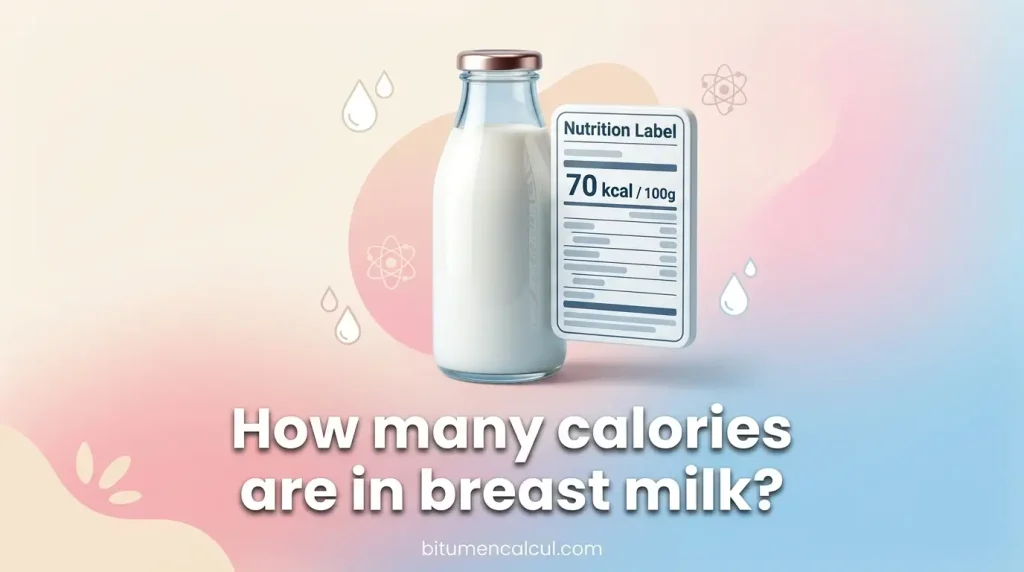
On average, human breast milk contains 70 kcal in 100 grams.
To put production capacity into perspective:
- A healthy mother nursing twins or triplets can generate between 2,000 to 3,000 grams of milk daily.
- By comparison, an average 6-month-old baby needs around 90 kcal/kg and consumes 769 grams of milk daily.
How Many Calories Do I Need While Breastfeeding?
Lactation places significant energetic demands on your body, often burning an additional 300 to 500 calories daily a metabolic draw roughly equivalent to a daily 45-minute run.
Your exact energy requirements depend on several individual factors:
- Body size and baseline metabolic rate
- Activity level throughout the day
- Breastfeeding status (exclusively or partially)
- Whether you’re pregnant again while still nursing
- Whether you’re nursing twins or multiple infants
- Your overall metabolism
Rather than relying on rough estimates, this tool uses established clinical formulas to provide a tailored assessment of your daily nutritional targets.
How many calories are burned while breastfeeding?
Postpartum metabolism demands significant energy to support lactation. Knowing your exact baseline daily requirement helps tailor your intake, which is why utilizing a reliable calorie calculator for breastfeeding can bring much-needed clarity to your postpartum journey.
Whether you are exclusively nursing, balancing formula and breastmilk, or preparing for a new pregnancy alongside lactation, obtaining an accurate energy estimate simplifies your overall meal planning approach.
Can You Safely Lose Weight While Breastfeeding?
Managing weight loss during lactation is entirely achievable, provided you approach the process with care and strategy.
Drastic caloric restriction, skipping meals, or severe dieting risks diminishing your milk volume, elevating stress markers, and dampening your overall metabolic rate. Conversely, adopting a balanced and gradual strategy yields steady progress.
Consider these core dietary guidelines:
- ✅ Eat enough: Always remain above your base caloric limit to protect your lactation volume.
- ✅ Focus on protein, fiber, healthy fats and lactation superfoods.
- ✅ Don’t skip meals – especially not breakfast (read my post about intermittent fasting here)
- ✅ Make meals easy and enjoyable
- ✅ Don’t stress about working out – high cortisol from stressful workouts can sabotage your weight loss efforts.
Does pumping burn the same calories as breastfeeding?
Mechanically and metabolically, pumping burns the same amount of calories as breastfeeding. Regardless of whether milk is extracted directly by nursing or through mechanical expression, the physiological synthesis of breast milk relies on the identical energetic pathway.
To estimate your daily expenditure when expressing milk, your current postpartum duration serves as the primary benchmark:
FAQs
Conclusion
Meeting your nutritional demands while nursing boils down to supporting milk production through adequate nourishment while making intentional, safe adjustments for your postpartum goals. Because milk synthesis requires substantial daily energy often equivalent to an extra 300 to 500 calories maintaining a minimum intake above 1,500 to 1,800 calories ensures your milk supply and overall metabolic health remain fully protected. Whether you are nursing directly or pumping, prioritizing nutrient-dense whole foods, staying well-hydrated, and aiming for a conservative weight loss pace of no more than 1 pound per week will help you achieve sustainable results without compromising your well-being. Always consult with your healthcare provider or a registered dietitian to tailor these guidelines to your individual needs and journey.
Read More:




One Comment