
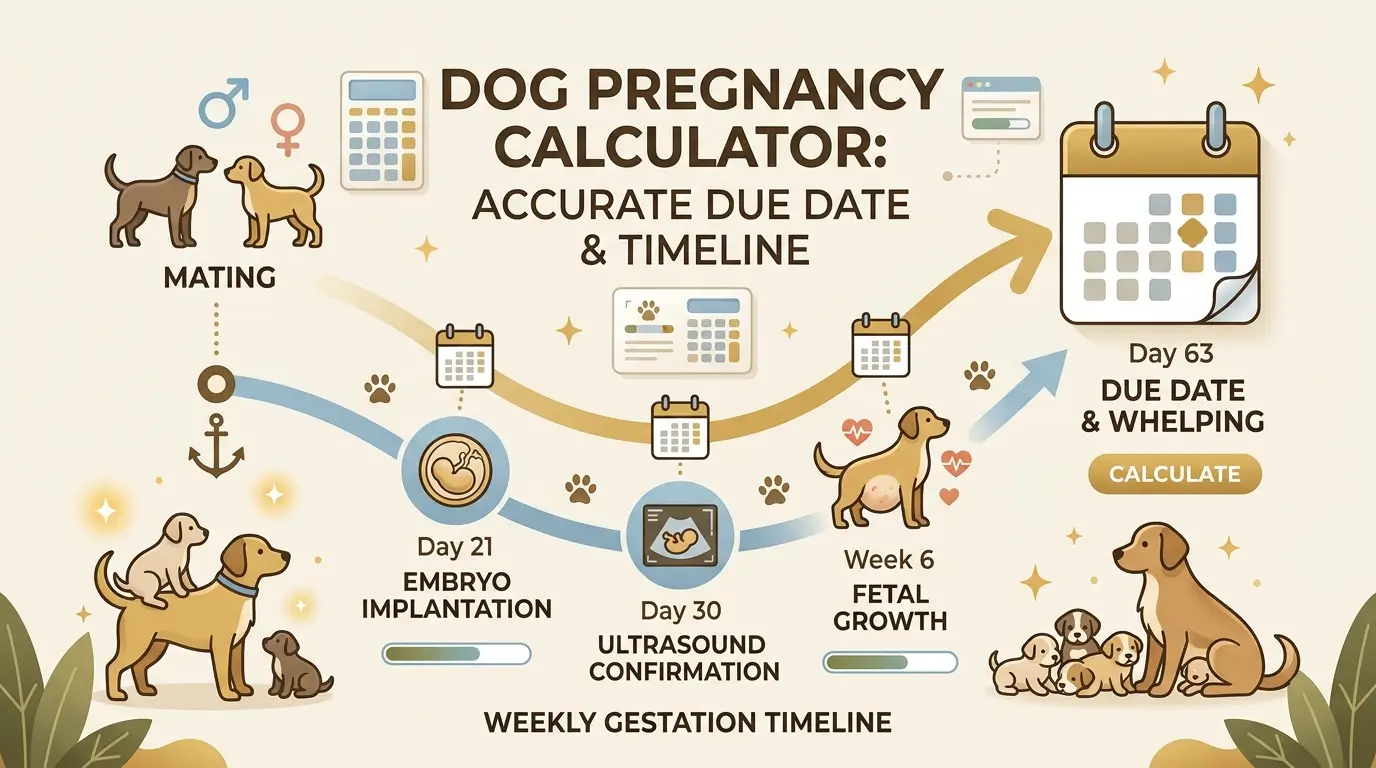
Dog Pregnancy Calculator: Accurate Due Date & Timeline
Dog Pregnancy Calculator
Estimate due dates, current milestones, and stage of pregnancy.
Canine Gestation Timeline
Track your dog’s development stages below. Highlighted card reflects the current stage.
Early Development
Fertilization occurs in the oviducts. Embryos begin their journey toward the uterus.
Embryo Development
Embryos continue dividing and move into the uterine horns. Maintain normal diet and activity.
Implantation & Early Growth
Embryos implant into the uterine wall. Vital organs begin forming. Mild behavioral changes may occur.
Pregnancy Development
Veterinarians can often confirm pregnancy via ultrasound or palpation around day 25–28.
Visible Physical Changes
Fetal development accelerates. Weight gain begins, nipples expand, and nutritional needs increase.
Rapid Fetal Growth
Abdomen significantly enlarges. Claws and coats begin forming. Switch to puppy or high-calorie food as advised.
Continued Development
Bodies are fully formed. Puppies grow rapidly. Prepare the whelping box and introduce it to the mother.
Final Development & Birth Preparation
Puppies move into the birth canal position. Monitor body temperature daily; a drop usually indicates labor within 24 hours.
Planning for upcoming puppies? A dog pregnancy calculator helps you predict your pet’s expected delivery date. Standard canine gestation typically lasts around 63 days (roughly two months) from the point of ovulation, though normal delivery can occur anywhere between 58 and 68 days.
How to estimate the delivery date of pregnancy
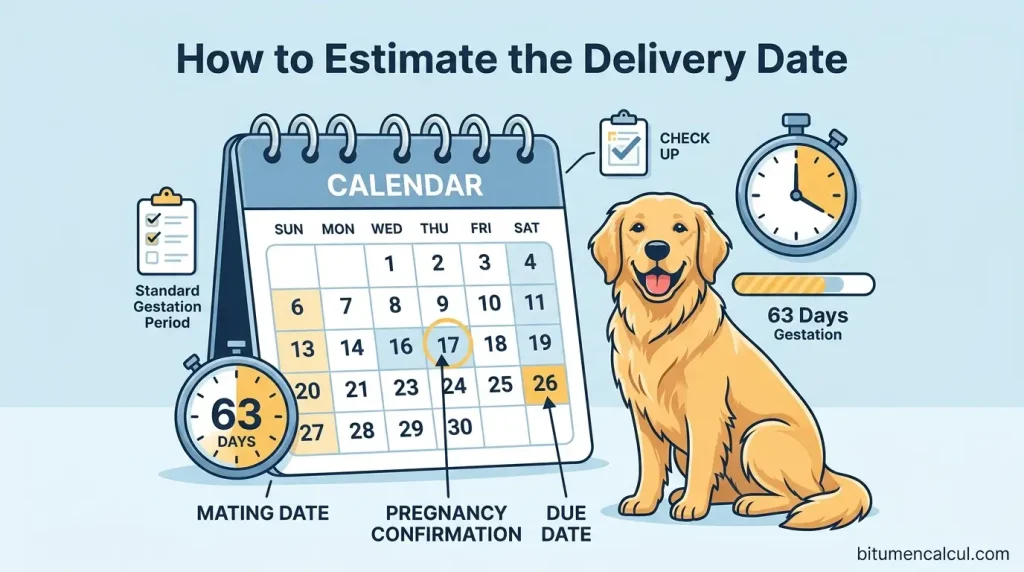
To calculate the expected birth date, identify the date of mating or successful insemination:
- Record the mating date.
- Add 63 days to estimate the central due date.
Note: Because sperm can remain viable inside the female for several days before fertilization, the actual duration of pregnancy may appear slightly shorter or longer depending on the exact day of ovulation.
Stages of Canine Pregnancy
- Weeks 1–3: Embryos implant in the uterine wall. The mother rarely shows outward physical signs, though minor changes in appetite or mood may occur.
- Weeks 4–6: A vet can confirm pregnancy via ultrasound or palpation. Foetal development accelerates, and the mother’s abdomen begins to expand.
- Weeks 7–9: Nesting behavior begins. Puppies move into position, and milk production starts shortly before labor.
If you suspect your dog is pregnant, schedule a check-up with a veterinarian to confirm the pregnancy, check the health of the mother, and receive tailored advice for prenatal care and whelping preparation.
Canine Gestation & Due Date Guide
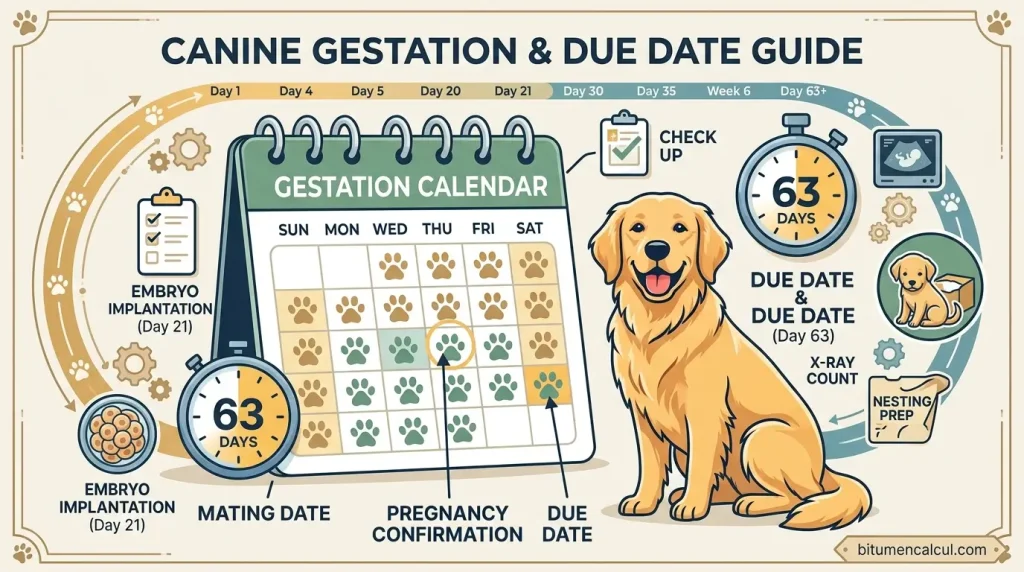
Determining your dog’s expected delivery window helps you prepare for a safe whelping process. Standard canine pregnancy lasts roughly 63 days (about two months), though healthy deliveries naturally range from 58 to 68 days.
How to Calculate the Due Date
If you know when breeding took place, use this straightforward estimation:
$$\text{Estimated Due Date} = \text{Date of Mating} + 63\text{ days}$$
Because ovulation and actual conception can occur a few days after mating, treat this calculated date as an estimate rather than a strict deadline.
Veterinary Methods to Confirm & Date Pregnancy
When the exact mating date is unknown or to verify a suspected pregnancy a veterinarian can use several diagnostic tools:
| Method | Timing | What It Determines |
| Abdominal Palpation | Around 28 days post-mating | Detects developmental swellings in the uterus. |
| Ultrasound Scan | Early to mid-pregnancy | Confirms pregnancy, assesses foetal viability, and estimates gestational age. |
| Relaxin Hormone Test | Mid-pregnancy | Measures a hormone produced uniquely during pregnancy to confirm status. |
| Abdominal X-Ray | Late pregnancy | Counts foetal skeletons once bone ossification is sufficient for clear visibility. |
Complete Guide to Dog Pregnancy, Due Dates, and Whelping
Understanding your dog’s reproductive cycle, pregnancy signs, factors influencing litter size, and labor requirements ensures you are fully prepared for the arrival of puppies.
Reproductive Cycle & Fertility
- Fertility Window: Female dogs can become pregnant between 2 and 6 years of age.
- Peak Litter Size: Fertility and litter size typically peak during the female’s second or third heat cycle.
- Heat Cycle Frequency: A standard heat cycle recurs every 5 to 11 months.
- Ovulation Dynamics: An egg cell requires 2 to 5 days of maturation after ovulation before it can be successfully fertilized by sperm.
Recognizing Dog Pregnancy
During pregnancy, a female dog’s body undergoes distinct physical and physiological changes:
- Increased Appetite & Weight: The mother’s food intake and body weight gradually increase.
- Blood Profile Changes: Clinical tests often reveal mild anemia alongside an elevated white blood cell count.
- Pseudopregnancy Warning: False pregnancies are relatively common in dogs and can closely mimic true pregnancy symptoms.
Key Factors Determining Litter Size
The total number of puppies in a litter varies based on several specific factors:
| Factor | Influence on Litter Size |
| Breed & Size | Large breeds average 8–12 puppies; toy/small breeds average 1–4 puppies. |
| Sperm Count | The quality and quantity of the male’s sperm at mating. |
| Mating Timing | How closely breeding aligns with peak fertility. |
| Maternal Health | Overall health, nutrition, and physical condition of the female. |
| Uterine Health | The state of the uterus, including history of previous pregnancies. |
Signs of Onset Labor
As the estimated delivery date approaches, monitor for key labor signals:
- Temperature Drop: Rectal temperature typically drops by 1.8 °F (approx. 1 °C) shortly before active labor begins.
- Physical Symptoms: Rapid breathing (panting) and noticeably increased thirst.
- Nesting Behaviors: The dog becomes restless or anxious, often gathering toys and bedding into a quiet, protected space.
Labor Duration Note: Total labor duration varies significantly, lasting anywhere from 12 to 60 hours.
Essential Whelping Kit Checklist
Prepare your delivery supplies well before the computed due date. Keep these essential items within easy reach:
- Sterile gloves
- Sterilized scissors (for umbilical cord management)
- Prepared puppy formula and feeding bottle (in case supplemental feeding is required)
Care Guidelines for Pregnant Dogs & Newborn Puppies
Preparing for a litter involves monitoring the mother’s nutritional needs, ensuring medication safety, and guiding newborn puppies through their early developmental stages.
Medication Safety During Gestation
- Veterinary Consultation: Always inform your veterinarian immediately if you suspect or confirm your dog is pregnant before administering any treatments.
- Restricted Medications: Certain drugs including specific classes of antibiotics and antifungal treatments must be strictly avoided during pregnancy to prevent harm to the developing foetuses.
Maternal Nutrition & Feeding Schedule
A pregnant dog’s energy requirements increase significantly as the pregnancy progresses and during nursing:
| Stage of Gestation / Lactation | Recommended Increase in Food Intake |
| Month 1 (Weeks 1–4) | Standard daily portion. |
| Start of Month 2 (Week 5+) | 20%–25% increase over usual intake. |
| Late Gestation (Weeks 8–9) | 50% increase over usual intake. |
| Lactation Period | 100% increase (double her normal daily portion). |
Proactive Monitoring: Keep a close eye on her daily feeding habits to ensure she is consuming enough calories to support both her health and litter growth.
Newborn Puppy Development & Care
- Eye Opening Window: Puppies begin opening their eyes between 8 to 10 days after birth.
- Visual Perception: Clear visual discrimination between shapes does not fully develop until around day 18.
- Nursing Guidance: Because early vision is limited, puppies having trouble nursing may need gentle manual assistance finding and latching onto a nipple. Once positioned, their natural instincts will guide them.
Important Dietary Safety Warning
- Toxicity Danger: Never feed puppies or adult dogs chocolate or chocolate-flavoured products. As puppies grow older and more curious, ensure all household sweets are kept safely out of reach.
How Do You Know if Your Dog is Pregnant?
Since dogs cannot communicate early pregnancy directly, recognizing physical and behavioral shifts is essential for timely care.
Physical and Behavioral Indicators
If your dog has recently mated or gone through a heat cycle, watch for these common physical and behavioral changes:
- Nutritional Changes: A noticeable increase in appetite.
- Physical Modifications: Weight gain, abdominal enlargement, or swollen nipples.
- Energy Levels: Fatigue or tiring more easily during normal daily activities.
- Behavioral Shifts: Shifts in temperament, such as becoming unusually affectionate or unusually irritable.
Veterinary Diagnostic Timeline
If you notice any of these signs, schedule a veterinary visit. A veterinarian can confirm a pregnancy and check the litter’s health using specific diagnostic methods at different stages:
| Diagnostic Method | Typical Confirmation Window | What It Measures |
| Hormone Test | 21–25 days post-mating | Detects specific pregnancy-related hormone levels. |
| Ultrasound | Around 30 days post-mating | Confirms gestational sacs and fetal heartbeats. |
| X-Rays | From 45 days onward | Visualizes skeletal development to count puppies accurately. |
| Abdominal Palpation | 45–60 days post-mating | Gently feels the abdomen to assess gestational swellings. |
FAQs
Conclusion
Managing a canine pregnancy requires balancing precise timing with attentive, stage-specific care. While calculating 63 days from mating gives a reliable central due date, pairing this timeline with professional veterinary checkups such as ultrasounds or relaxin testing ensures an accurate assessment of both maternal health and litter size. By adjusting her caloric intake in the second month, stocking essential whelping supplies, and monitoring her daily temperature for the pre-labor drop below 100°F (37.7°C), you create a safe, supportive environment for a smooth delivery and healthy newborn pups.
Read More: