
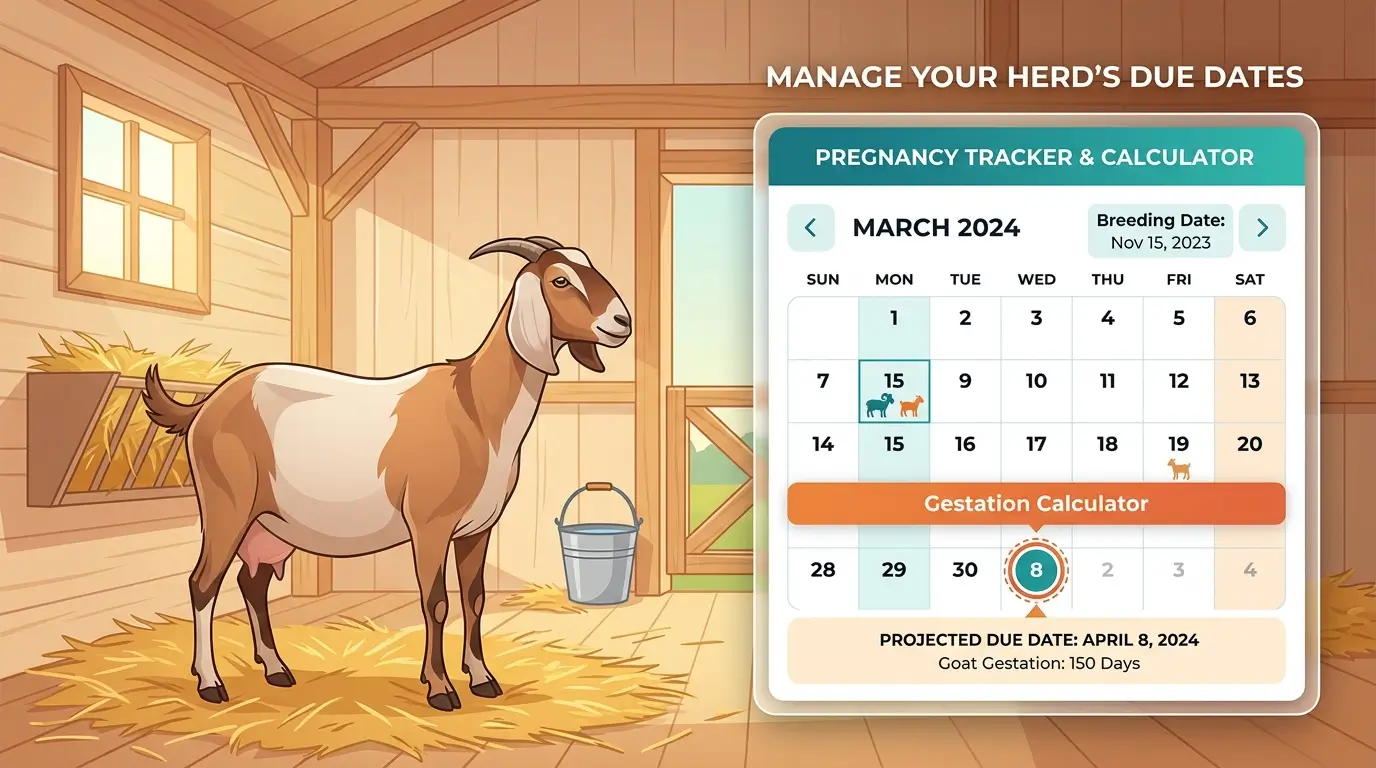
Goat Gestation Calculator: Exact Due Date & Kidding Chart
Goat Gestation Calculator
Estimate your goat’s expected kidding date
Goat Gestation Calculator
Welcome to your complete guide on goat gestation and kidding. This practical manual supports you through every stage of the journey from breeding through to birth, offering clear guidance, real-world examples, and actionable steps to help you approach the process with confidence. Whether you are preparing for your very first kidding season or managing your fifteenth, having a dependable reference ensures a calmer, safer experience for both you and your herd.
Please note that this guide is intended for informational purposes only and does not substitute for professional veterinary care. It draws on hands-on farming experience, close observation, and standard best practices for small-scale goat management. Always consult a qualified veterinarian if you have concerns or encounter any complications.
Understanding Goat Gestation
A goat’s pregnancy generally lasts around 150 days, though a normal delivery window ranges anywhere from 145 to 155 days. Miniature breeds such as Pygmy goats and Nigerian Dwarves frequently kid on the earlier end of this spectrum (145–150 days). Larger standard dairy breeds tend to carry longer.
Litter size plays a significant role in delivery timing. Does carrying twins or triplets usually give birth sooner, whereas a doe carrying a single kid often carries longer. Single kids can grow larger in the womb, which occasionally makes labor more challenging. Maintaining proper mineral intake and ideal body condition helps ensure smooth contractions and lowers the risk of birthing difficulties.
Knowing the exact breeding date allows you to narrow down the target 145–155 day timeframe so you can prepare your setup well before labor begins.
💡 Pro Tip: CDT Vaccination Timing
Administering the CDT vaccine approximately 30 days before the due date helps the doe pass essential antibodies to her kids through her initial colostrum.
Gestation Snapshot
| Category | Typical Timeline / Pattern |
| Average Gestation | 150 days |
| Expected Kidding Range | 145 to 155 days |
| Miniature Breeds (e.g., Nigerian Dwarf, Pygmy) | Usually 145–150 days |
| Standard Breeds | Usually 150–155 days |
| Multiple Kids (Twins/Triplets) | Tends to shorten gestation |
| Single Kids | Tends to lengthen gestation; larger kid size possible |
| Close Monitoring Begins | Day 140 |
Keeping Track of Breeding Dates
Maintaining thorough breeding logs takes the guesswork out of kidding season. Make a habit of noting down:

- The exact date the doe was exposed to the buck
- Which buck was used
- Any heat behaviors you observed
Even if you do not see the mating happen, writing down the day the doe entered the buck’s pen gives you a clear baseline for calculating her potential due dates.
It is equally essential to record every subsequent heat cycle and attempted breeding. Does do not always catch on the first attempt. A typical heat cycle recurs every 18 to 21 days, but some animals experience short cycles (7–10 days) or silent heats. A doe might show signs of pregnancy without being bred, or she might settle on a subsequent cycle. Clear documentation helps track individual reproductive habits and avoids miscalculated due dates.
Detailed logs are also invaluable if a doe consistently fails to settle. While bad timing can be the culprit, recurring heats may indicate underlying issues such as dietary deficiencies, mineral imbalances, high stress levels, or buck infertility. Having a complete log helps you evaluate trends and determine when to consult a veterinarian.
Identifying Heat in Does
To catch breeding windows accurately, look out for these classic indicators of estrus:

- Tail Flagging: Rapid, continuous tail wagging
- Vocalisation: Frequent, loud calling or bleating
- Physical Changes: A swollen, prominent vulva
- Mucus Discharge: Clear, stringy discharge from the vulva
- Buck Interest: Pacing along fence lines or standing still for the buck
- Behavioral Shifts: General restlessness, pacing, or mounting other herd mates
Practical Ways to Encourage Estrus in Does
While certain does cycle reliably on a set schedule, others require an external cue to kickstart their reproductive cycle. If a doe is slow to come into heat, these practical methods can help stimulate her estrus:
- Walk Her Near the Buck: Lead the doe alongside the buck’s enclosure. Direct scent contact and hearing his calls frequently prompt a doe to cycle within a few days.
- Use a “Buck Rag”: Rub a clean towel over the buck’s legs and chest particularly areas where he scent-marks. Suspend this towel near or inside the doe’s pen to expose her to his pheromones.
- Allow Controlled Interaction: Let the buck sniff the doe through a secure fence. His behavioral response can indicate if she is approaching heat.
- Introduce a Different Buck: Switching to a new buck can trigger a response in does that showed no interest in the previous one, as a fresh scent profile often stimulates heat.
- Observe Subtle Behavioral Shifts: Not every doe will vocalise or flag her tail. Look out for quiet indicators such as general agitation, increased pacing, or willingness to stand near the buck.
While these approaches are not foolproof, they serve as effective natural triggers particularly for seasonal breeders or does that are hesitant to cycle. Maintain detailed records of these attempts and monitor your herd’s behavior carefully.
Why Separate Housing for Bucks Matters
Maintaining separate quarters for bucks is a critical management practice that directly impacts herd safety and health. When bucks run with does continuously, it creates unpredictable breeding timelines, leading to unexpected kiddings, zero preparation time, and kids born in harsh weather conditions without supervision.
Unplanned births often lead to avoidable emergencies, such as hypothermic newborn kids found in unheated barns. Knowing your does’ precise due windows helps prevent these crises.
Separating your bucks and recording exposure dates provides several major advantages:
- Targeted Preparation: Allows you to identify her precise kidding window and set up a warm, secure kidding environment in advance.
- Active Supervision: Enables you to be present during delivery to detect complications early and reduce newborn mortality from cold exposure.
- Correct Care Timing: Facilitates accurate scheduling for pre-kidding vaccinations like CDT.
- Clear Assessment: Helps you accurately evaluate whether a doe is genuinely overdue or facing labor difficulties.
Recognising Mating Behaviour and Breeding Success
Understanding standard rutting and mating behaviours helps confirm if a successful breeding took place within the doe’s fertile window.
Buck Rutting Behaviours
During the rut, bucks exhibit distinct physical and behavioural signs:
- Self-Scenting: Bucks urine-mark their legs, face, and beard to advertise fertility, creating a powerful musky scent that attracts does in heat.
- Vocalisations and Displays: Bucks make distinct blubbering sounds while flicking their tongues, along with persistent chasing and nudging to test if the doe will stand.
- Flehmen Response: Curling the upper lip to draw scents into the vomeronasal organ helps the buck detect reproductive pheromones.
Key Indicators of a Successful Mating
You can verify that a successful mating occurred by observing the following cues:
- Receptive Standing: The doe stands completely still, flagging her tail, and allows the buck to mount.
- Mount and Ejaculation: The buck mounts, performs a final deep thrust, and often utters a short grunt.
- Post-Mating Stance: Immediately after service, the doe typically walks away with a noticeably hunched back one of the most reliable visual signs of a successful breeding.
How Many Times Should They Mate?
Recommended Breeding Frequency
Aiming for two to three confirmed breedings during a single heat cycle offers the best chance of success.
- Short Fertile Window: A doe’s fertile period typically lasts only 12 to 24 hours.
- Increased Success: Allowing multiple mounts during this brief timeframe improves the likelihood that she will settle.
Confirming a Successful Mating
You can usually tell a breeding attempt was successful by observing a few distinct physical cues:
- The buck delivers a strong final thrust accompanied by a grunt.
- The doe walks away with a characteristic hunched posture.
- The doe may remain willing to stand for additional mounts.
- The buck gradually loses interest once service is complete.
Note: If the doe displays signs of heat again 18 to 21 days later, the initial breeding did not take, and she will need to be rebred.
Key Benefits of Detailed Breeding Records
Maintaining accurate records of exposure and mating dates takes the guesswork out of pregnancy and delivery. Clear documentation allows you to:
- Spot Complications Early: Easily identify overdue does or catch early signs of labor.
- Prepare Equipment: Set up your kidding kit and kidding stalls well in advance.
- Manage Nutrition: Safely adjust feed rations and nutrition as the pregnancy progresses.
- Organise Your Time: Schedule farm coverage and personal plans around expected due dates.
- Lower Stress: Keep the experience calm and manageable for both you and your livestock.
Goat Pregnancy Timeline (Month by Month)
Goat pregnancy typically spans 145 to 155 days, influenced by breed, litter size, weather, and the doe’s physical condition. Standard breeds generally average 150–155 days, whereas miniature and Nigerian Dwarf goats often kid around 145–150 days.
Monitoring monthly fetal growth helps you tailor your doe’s diet, mineral supplementation, and hoof care to maintain her comfort throughout gestation.
Month 1 Development: Fertilised eggs implant; placenta begins forming. No visible outward changes. Care: Maintain her regular diet, good quality hay, and free-choice minerals. Avoid abrupt feed changes. Encourage gentle exercise and normal herd routines.
Month 2 Development: Skeletal structures, organs, and facial features begin forming. No visible physical changes. Care: Continue regular feeding and mineral access. Observe behavioral signs that confirm she settled.
Month 3 Development: Fetal growth accelerates; belly may begin to widen slightly. Faint fetal movements may be felt in smaller breeds near the end of the month. Care: Feed quality hay and minerals. Avoid overfeeding grain. Trim hooves if needed to accommodate increasing weight.
Month 4 Development: Kids gain weight rapidly; belly expansion becomes obvious and appetite increases. Care: Provide good hay, clean water, and minerals. Add a small amount of grain only if the doe is thin. Maintain regular hoof trims to support her changing center of gravity.
Month 5 Development: Rapid kid growth restricts stomach capacity. Udder fills, ligaments soften, and kids shift into birthing position during the final two weeks. Care: Offer smaller, frequent meals. Increase hay quality and introduce grain if body condition requires support. Complete final hoof trim early in the month. Set up the kidding area.
Critical Month 5 Health & Labor Considerations
Pregnancy Toxemia Risk The final six weeks carry a heightened risk for pregnancy toxemia, particularly in overweight does or those carrying multiples. Because rapid fetal growth limits how much bulk feed the doe can consume, monitoring her daily appetite, energy levels, and overall behavior is crucial.
Cervical Mucus Discharge It is common for does to pass small amounts of thick, white mucus weeks before their actual due date as the cervix softens and seals. As long as the discharge remains clear or white and the doe behaves normally, it indicates routine progress rather than premature labor.
Late Pregnancy Feeding & Health
The final six weeks of pregnancy are when the doe’s nutritional needs increase the most. The kids grow rapidly, her rumen space decreases, and her body works harder to support both herself and her developing kids. Good feeding, mineral balance, and basic health checks during this time help prevent complications and set her up for a smooth kidding.
Feeding Adjustments (Grain & Minerals)
During the last six weeks, the kids grow rapidly and take up more space, which can limit how much the doe can eat at once. Offer high-quality hay 24/7 and avoid sudden feed changes during this time.
Many breeders slowly increase grain starting about five weeks before kidding for does that need extra calories, especially those carrying multiples. Increase grain gradually over about a week and avoid overfeeding, as too much grain can contribute to pregnancy toxemia.
Free-choice minerals and clean water are essential. In low-selenium areas, work with your veterinarian or local extension office to decide if selenium support is appropriate for your herd.
Deworming & Health Checks
Some breeders deworm does about one week before kidding, especially in high-parasite areas or if FAMACHA scores are poor. Always choose products considered safe for pregnant does, follow veterinary guidance, and check milk withdrawal times before treating.
A quick FAMACHA check and body condition score before kidding helps you catch issues early. If you are new to FAMACHA scoring, look up a reputable step-by-step guide or video demonstration so you can learn the correct technique.
After kidding, many breeders work with their veterinarian to plan a post-kidding deworming strategy for both dam and kids. The stress of birth can cause a temporary rise in parasite load (“worm bloom”), so it is helpful to discuss a plan based on your region and herd history.
Hoof Care During Pregnancy
Pregnant does often need their hooves trimmed a little more frequently, especially in the last 6 to 8 weeks. As the kids grow, the doe’s weight shifts and her stance widens, which puts extra pressure on the hooves.
Keeping hooves trimmed helps her walk comfortably, reduces stress on her joints, and supports good circulation and overall health during late pregnancy.
FAQs
Conclusion
Effective goat reproduction relies on meticulous management across every phase—from recognizing heat behaviors and keeping detailed exposure records to separating bucks and adjusting nutritional care during the critical final weeks of the 150-day gestation period. By proactively tracking breeding dates, administering timely vaccinations like CDT, and monitoring physical indicators as labor approaches, herd managers can prevent metabolic complications like pregnancy toxemia, minimize birthing risks, and ensure the long-term health and productivity of both does and kids.
Read More: