
Free GPA Calculator – Calculate & Track Your GPA
Age Calculator
Calculate your exact age in years, months, days, and time lived.
Calculate your high school, college, or cumulative GPA with ease, track your academic performance, and learn how different GPA scales and grading systems work to better understand your results.
GPA Planning Calculator
A GPA Planning Calculator helps you determine what GPA you need in your remaining coursework to reach a target cumulative GPA or maintain your current GPA.
To calculate this, I need the following information:
- Current cumulative GPA: (e.g., 3.20)
- Total completed credit hours: (e.g., 60)
- Desired cumulative GPA: (e.g., 3.50)
- Credit hours you still plan to complete: (e.g., 30)
Once you provide these values, I'll calculate:
- The minimum GPA you must earn in your remaining courses.
- Whether your target GPA is achievable.
- A clear GPA Planning Report showing your current standing and what you need to achieve your goal.
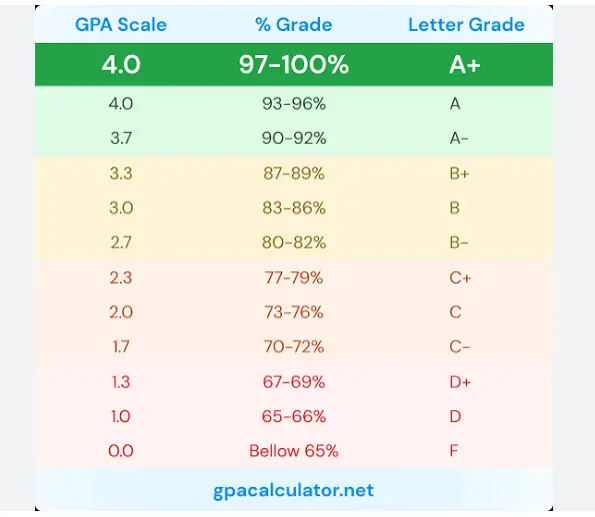
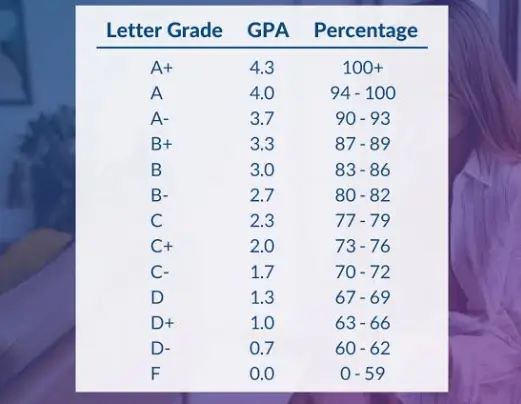
Letter Grade Conversion Table
| Letter Grade | Grade Points |
|---|---|
| A+ | 4.3 |
| A | 4.0 |
| A- | 3.7 |
| B+ | 3.3 |
| B | 3.0 |
| B- | 2.7 |
| C+ | 2.3 |
| C | 2.0 |
| C- | 1.7 |
| D+ | 1.3 |
| D | 1.0 |
| D- | 0.7 |
| F | 0.0 |
Ignored grades: P (Pass), NP (Not Pass), I (Incomplete), and W (Withdrawal) are not included in GPA calculations.
GPA Formula
- Convert each letter grade to its grade point.
- Multiply the grade point by the course's credit hours.
- Add all grade points earned.
- Divide by the total credit hours.
Formula:
GPA = Total Grade Points ÷ Total Credit Hours
Example 1
| Course | Credits | Grade | Grade Points Earned |
|---|---|---|---|
| Math | 4 | A+ | 17.2 |
| Physics | 2 | B | 6.0 |
| English | 3 | A | 12.0 |
| Total | 9 | — | 35.2 |
GPA = 35.2 ÷ 9 = 3.91
Example 2
| Course | Credits | Numeric Grade | Grade Points Earned |
|---|---|---|---|
| Biology | 4 | 3.0 | 12.0 |
| Chemistry | 3 | 2.0 | 6.0 |
| Chemistry Lab | 2 | 4.0 | 8.0 |
| Total | 9 | — | 26.0 |
GPA = 26 ÷ 9 = 2.89
Guidelines for Raising GPA
There is no guaranteed formula for increasing your Grade Point Average (GPA). Every student learns differently, so a strategy that helps one person may not produce the same results for someone else.
That said, developing strong study habits and maintaining consistent academic practices can improve learning and, over time, may contribute to a higher GPA. While the suggestions below are anecdotal rather than guaranteed methods, they are widely considered beneficial for academic success.
Some general principles include:
- Study consistently instead of waiting until the last minute.
- Attend classes regularly and stay engaged during lectures.
- Complete assignments on time.
- Seek help from instructors or classmates when you do not understand a topic.
- Review course material frequently to reinforce learning.
- Stay organised by keeping track of deadlines and upcoming exams.
- Manage your time effectively to balance coursework and other responsibilities.
- Focus on understanding concepts rather than memorising information.
Following these habits cannot guarantee a higher GPA, but they can strengthen your understanding of course material and improve your overall academic performance over time.
Actively Attending Classes
Regular class attendance is one of the simplest ways to support academic success. Since students or their families are paying for these classes, missing them not only wastes money but can also reduce learning opportunities. Even if a lecture seems repetitive or the teaching style is not ideal, attending class often provides valuable information that may not appear in lecture notes. For example, students who skip class might miss important announcements about exam dates, locations, or changes to course material.
Classroom discussions also add value beyond the posted notes. Questions asked by classmates and the instructor's explanations can offer helpful insights that improve understanding and make difficult concepts easier to grasp. These small details can have a meaningful impact on quizzes and exams.
Attending class also helps instructors become familiar with their students. In smaller classes, professors are more likely to remember students who participate, ask questions, and stay engaged. This familiarity may encourage greater understanding if unexpected situations, such as emergencies, affect assignment deadlines. Active participation also keeps students mentally involved in the lesson and allows confusion to be resolved immediately, which can contribute to stronger academic performance and, ultimately, a higher GPA.
Planning
Effective planning plays an important role in improving academic performance. Every student has a unique learning style some prefer long, uninterrupted study sessions, while others learn better by taking regular breaks. There is no single method that works for everyone. The most effective approach is the one that matches a student's learning preferences, schedule, and personal goals while making the best use of available study time.
Staying organised is equally important. Keeping assignments, study materials, and class notes well arranged makes it much easier to locate information when it is needed. Notes are most valuable when they support future learning. Since instructors often present large amounts of information during lectures, developing a note-taking system that is clear and easy to review helps students reinforce what they have learned.
Time management is another key part of planning. With only a limited number of hours available each day, students need to balance coursework with other responsibilities. Taking on more classes or activities than can be managed effectively may increase stress and negatively affect both learning and GPA. Creating a study schedule after selecting courses can help estimate the time required for each subject, making workloads feel more manageable and allowing students to recognise if they have committed to more than they can reasonably handle.
Regular review of course material is also an essential study habit. Waiting until the final exam to memorise an entire semester's content is often less effective than reviewing information consistently throughout the course. Periodic revision strengthens long-term understanding, reduces last-minute stress, and can improve exam performance, increasing the likelihood of achieving a higher GPA.
FAQs
Conclusion
Understanding how GPA is calculated gives you more control over your academic progress and helps you make informed decisions throughout your studies. By using a GPA Planning Calculator, following effective study habits, staying organised, and attending classes consistently, you can set realistic goals and work toward improving your overall GPA. Remember, steady effort and smart planning often make a bigger difference than last-minute preparation.
Read More:
- How To Calculate Theoretical Yield
- Age Calculator – Calculate Your Exact Age in Seconds
- Free Salary Paycheck Calculator – Calculate Net Income
- Mortgage Calculator – Calculate Your Home Loan Payment Instantly
- Tax Calculator: Fast, Accurate & Easy Tax Estimates Online
- Free Concrete Block Calculator (2026)