
50 to 1 Gas Oil Mix Calculator for Two Stroke Engines
Work out the exact amount of two stroke oil for any amount of gasoline, in ounces or milliliters, before you pour.
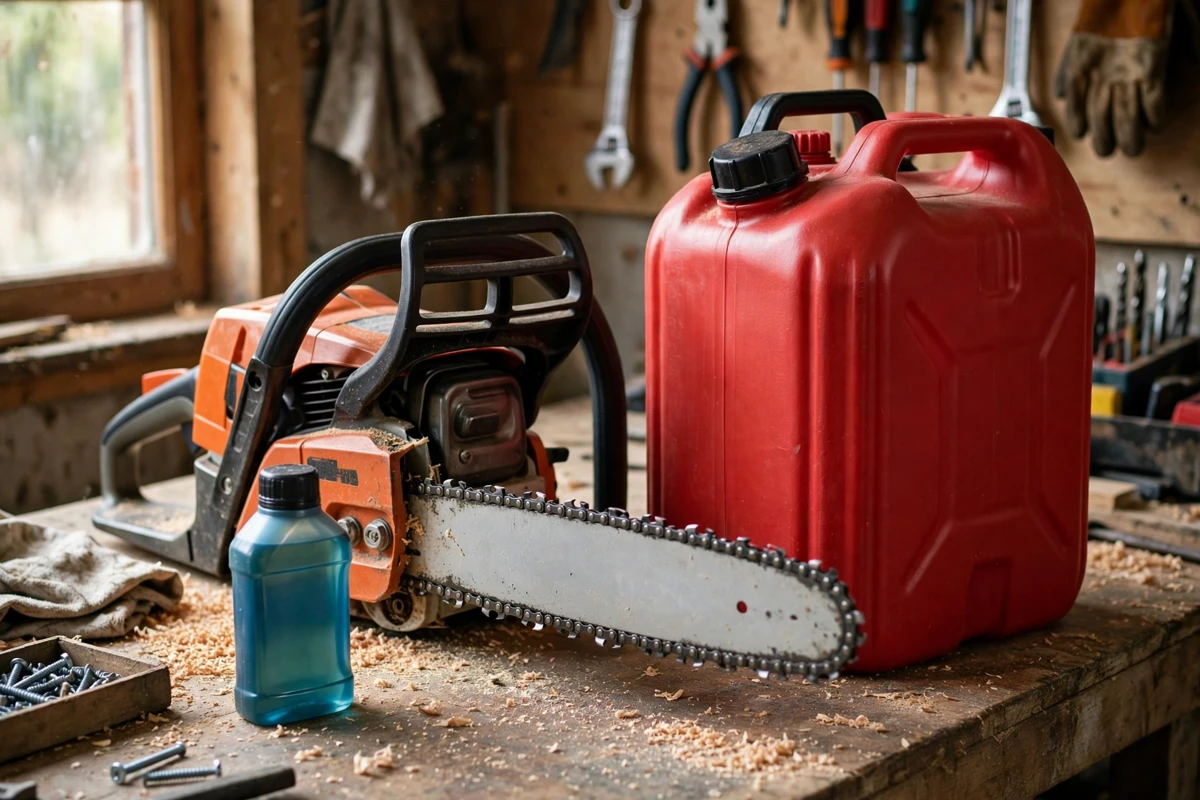
A 50 to 1 gas oil mix calculator tells you how much two stroke oil to add to a given amount of gasoline so the finished fuel matches a 50 to 1 ratio. Two stroke engines have no separate oil supply. The oil that lubricates the piston, crankshaft and bearings travels with the fuel itself, so it must be mixed into the gasoline before the fuel reaches the tank. Too little oil and the engine runs hot and wears fast. Too much oil and it smokes, fouls the spark plug and leaves carbon in the exhaust port.
The math behind the mix is short. One gallon of gasoline needs 2.56 fluid ounces of oil, and one liter needs 20 milliliters. Everything else is simple multiplication. This page gives you the calculator, the formula, a full mix chart for gallons and liters, and the mixing steps, so you can measure once and mix with confidence.
What Does 50 to 1 Mean?
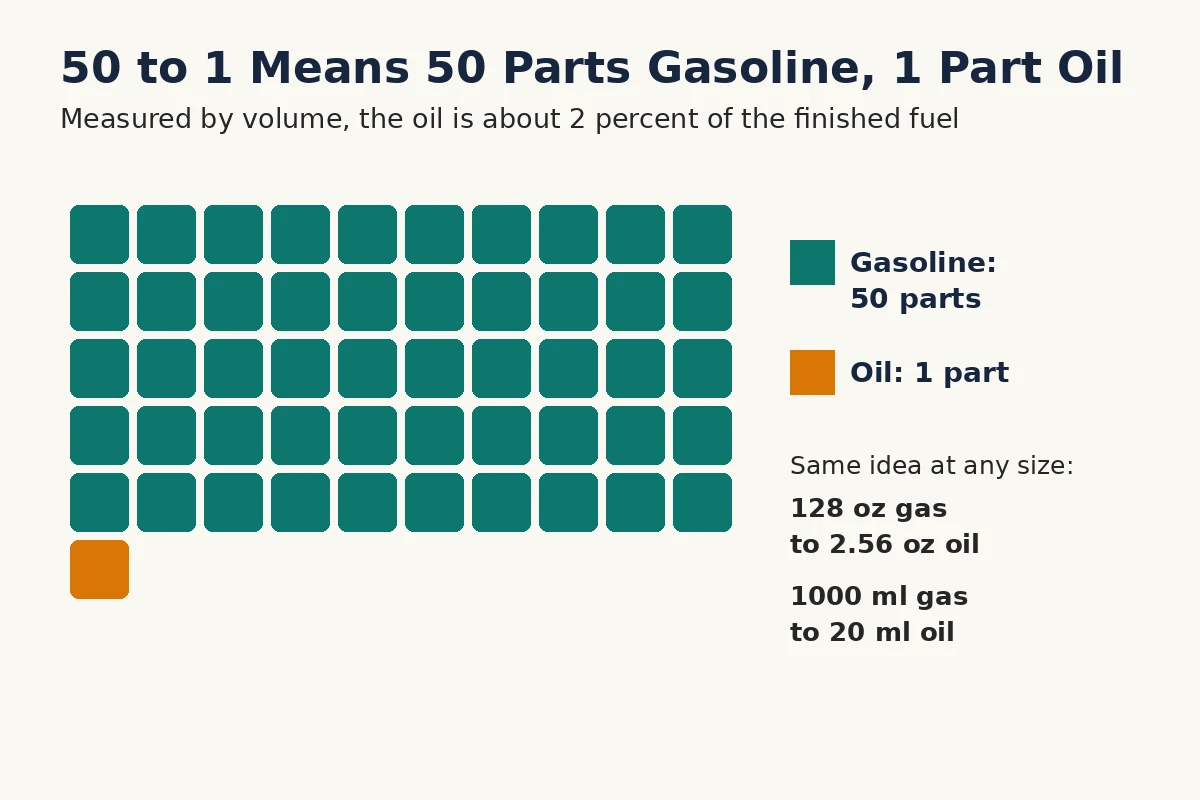
A ratio of 50 to 1 means 50 parts gasoline to 1 part oil, measured by volume. Divide a batch of finished fuel into 51 equal parts and 50 of them are gasoline while 1 is oil. The oil makes up about 2 percent of the mixture.
This ratio became the standard for modern handheld two stroke equipment because modern synthetic and semi synthetic oils lubricate better than older oils did. Engines that once needed 32 to 1 or 40 to 1 can often run safely on 50 to 1 when the manufacturer specifies it, and the leaner oil content burns cleaner, with less smoke and less carbon buildup. The ratio belongs to the engine, not to the oil bottle and not to habit, so the number in your manual or on the fuel cap always wins.
How to Use the 50 to 1 Gas Oil Mix Calculator
The calculator needs one input from you, the amount of gasoline you plan to mix:
- Decide how much fuel you want to prepare. Most people mix one gallon or five gallons at a time in a dedicated fuel can, or a few liters in a smaller container.
- Enter that amount in the calculator and choose gallons or liters as the unit.
- Leave the ratio at 50 to 1 unless your manual calls for something else. The calculator also offers other common ratios for older equipment.
- Read the result. The calculator shows the oil in fluid ounces and in milliliters, so you can use whichever measuring cup you have at hand.
- Measure the oil, pour it into the fuel can, add the gasoline, and shake the can gently so the oil spreads evenly through the fuel.
The Formula for a 50 to 1 Mix
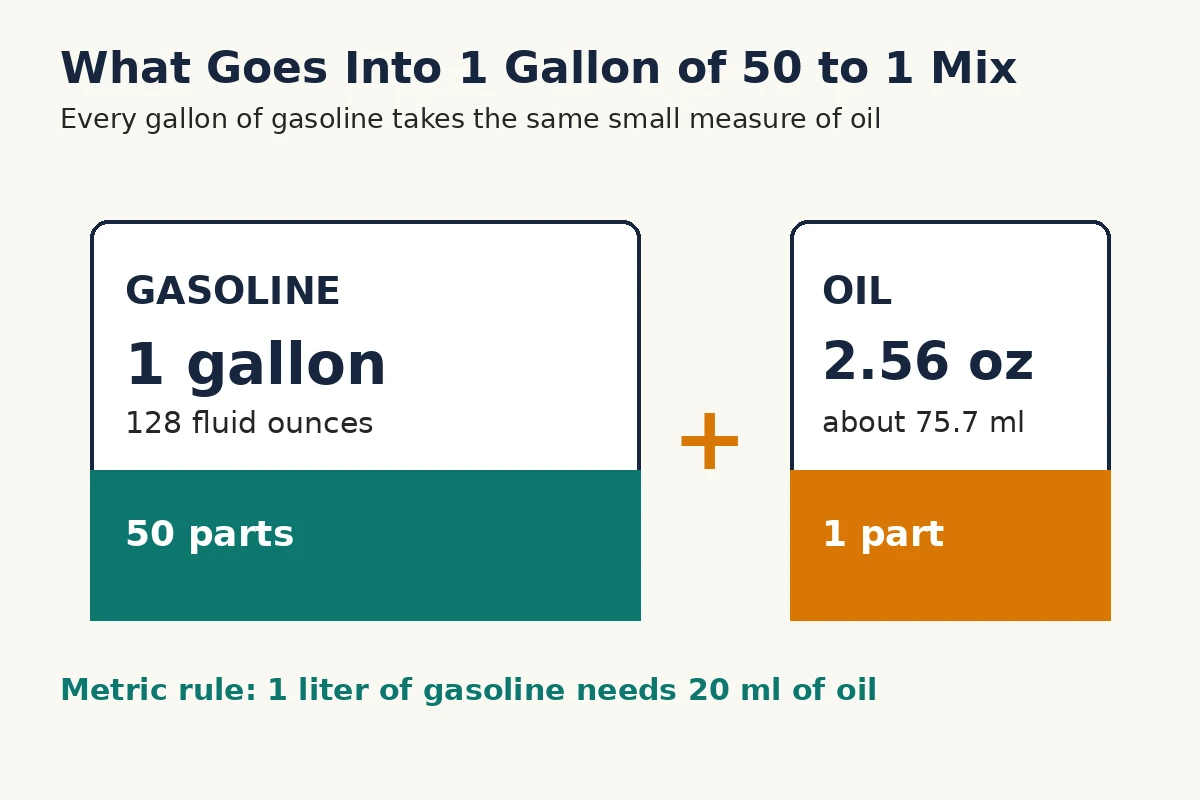
Every result on this page comes from one division. The oil you need equals the fuel amount divided by 50, once both use the same unit.
Oil needed = fuel amount ÷ 50
For US measurements, a gallon holds 128 fluid ounces, so the working formula becomes:
Oil (fluid ounces) = (gasoline in gallons × 128) ÷ 50
Because 128 ÷ 50 = 2.56, this shortens to a rule worth remembering: oil in fluid ounces = gallons × 2.56. Many people round 2.56 up to 2.6 ounces per gallon, which is why oil bottles for one gallon of fuel are sold in a 2.6 ounce size. The exact figure is 2.56.
For metric measurements, a liter holds 1000 milliliters, so the formula becomes:
Oil (milliliters) = (gasoline in liters × 1000) ÷ 50
Because 1000 ÷ 50 = 20, the metric rule is even simpler: oil in milliliters = liters × 20. The fuel amount is the gasoline you start with, the ratio is 50, and the answer is the oil to add. The oil is added on top of the gasoline, so a gallon plus its oil gives a little more than a gallon of finished fuel.
Worked Example: Mixing 5 Gallons and 1 Gallon
Suppose you are filling a five gallon can for a season of yard work. Running the formula:
- Oil in ounces: 5 gallons × 128 = 640 fluid ounces of gasoline. Then 640 ÷ 50 = 12.8 fluid ounces of oil. The shortcut agrees: 5 × 2.56 = 12.8.
- Oil in milliliters: 12.8 × 29.5735 = about 378.5 milliliters of oil.
- Finished fuel: the oil adds 0.1 gallon, so the can holds about 5.1 gallons of mixed fuel.
Now the single gallon version, the most common mix of all:
- Oil in ounces: 1 × 128 ÷ 50 = 2.56 fluid ounces of oil, the 2.6 ounce bottle size sold for this job.
- Oil in milliliters: 2.56 × 29.5735 = about 75.7 milliliters of oil.
And in metric, for a five liter mix:
- Oil in milliliters: 5 × 1000 ÷ 50 = 100 milliliters of oil, or 100 milliliters by the liters × 20 shortcut.
- Oil in ounces: 100 ÷ 29.5735 = about 3.38 fluid ounces.
50 to 1 Mix Chart for Gallons and Liters
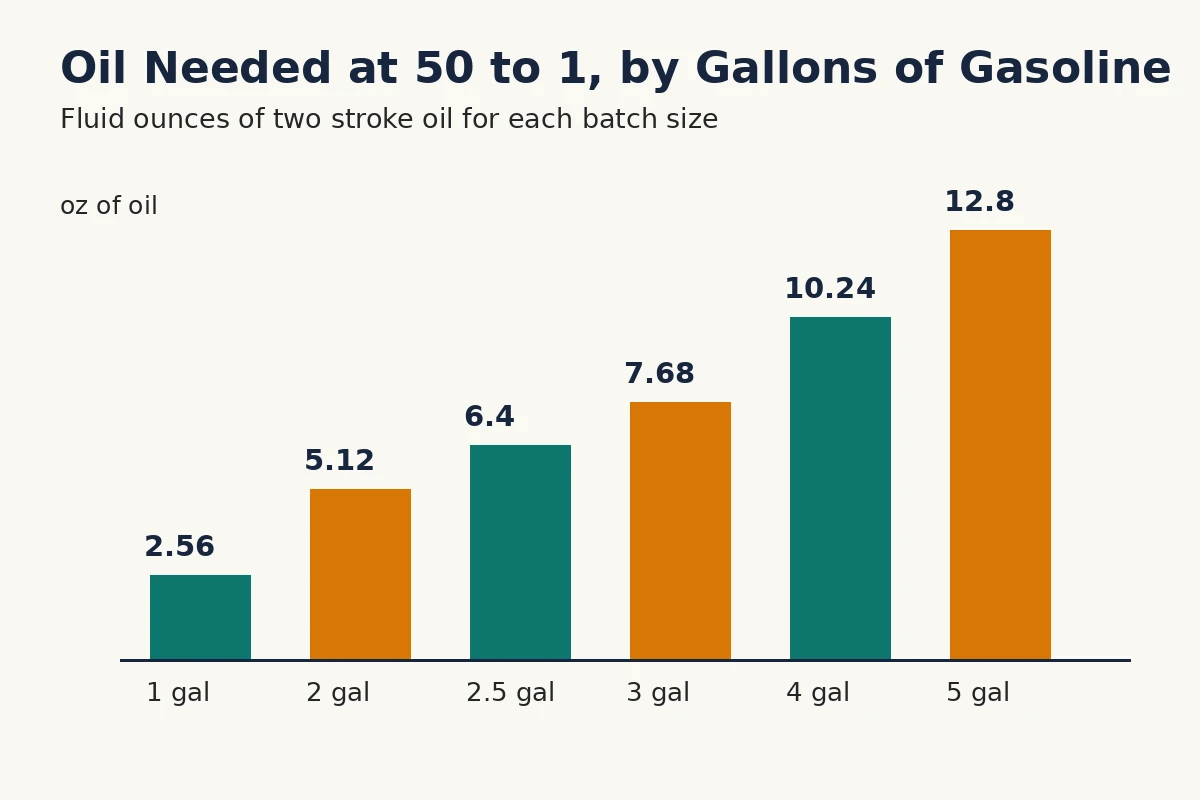
The chart below covers the amounts people mix most often. Every figure uses the exact formula above.
| Gasoline | Oil needed (fluid ounces) | Oil needed (milliliters) |
|---|---|---|
| 1 gallon | 2.56 oz | 75.7 ml |
| 2 gallons | 5.12 oz | 151.4 ml |
| 2.5 gallons | 6.4 oz | 189.3 ml |
| 3 gallons | 7.68 oz | 227.1 ml |
| 4 gallons | 10.24 oz | 302.8 ml |
| 5 gallons | 12.8 oz | 378.5 ml |
| 1 liter | 0.68 oz | 20 ml |
| 2 liters | 1.35 oz | 40 ml |
| 5 liters | 3.38 oz | 100 ml |
| 10 liters | 6.76 oz | 200 ml |
| 20 liters | 13.53 oz | 400 ml |
Two patterns are worth noticing. Every extra liter simply adds another 20 milliliters of oil, and the gallon column grows by 2.56 ounces per gallon. If your amount is not listed, use the calculator above or multiply by 2.56 for gallons and by 20 for liters.
Which Engines Use a 50 to 1 Mix?
Most modern handheld two stroke tools are built for 50 to 1. Chainsaws, string trimmers, leaf blowers, hedge trimmers and cut off saws from makers such as Stihl, Husqvarna, Echo, Ryobi and Makita generally specify 50 to 1. Many dirt bikes and some outboard motors call for ratios close to this, though outboards vary by model and age. A general fuel mix calculator or 2 stroke mix calculator lists these ratios side by side, while this page stays focused on the 50 to 1 mix most modern tools need.
Older equipment is the exception to watch. Tools built before roughly the early 2000s often specify richer mixes such as 40 to 1 or 32 to 1, and a few very old engines use 25 to 1 or 16 to 1. Those engines were designed around the oils of their time and genuinely need the extra oil. If the fuel cap and the manual disagree, follow the manual. Running a 40 to 1 engine on 50 to 1 fuel gives it about 20 percent less oil than designed, which shortens its life even if it runs fine today.
How to Mix Fuel Step by Step
Mixing in a clean, approved fuel can gives a more even result than mixing in the tool tank:
- Start with fresh gasoline and the correct two stroke oil. Check that the oil bottle and the tool manual agree on 50 to 1.
- Measure the oil for your fuel amount using the calculator or the chart on this page. A graduated measuring cup or a ratio marked mixing bottle removes the guesswork.
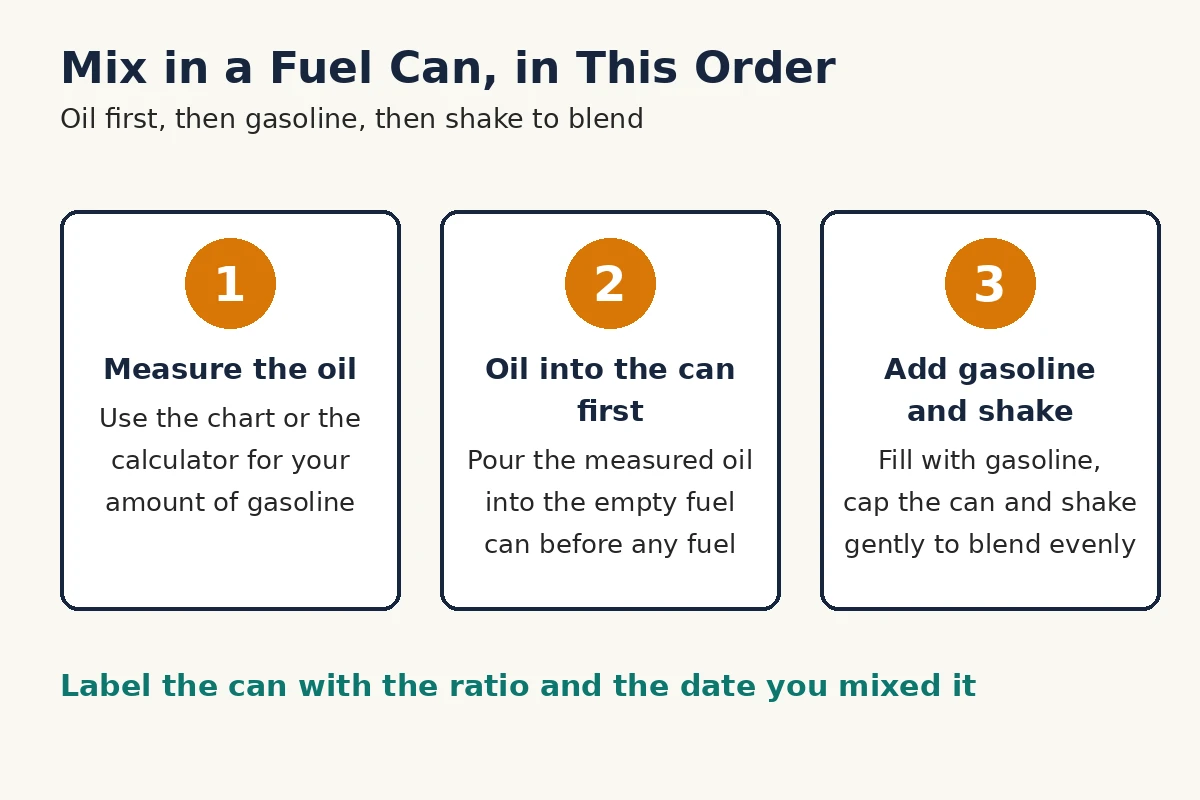
- Pour the measured oil into the empty fuel can first. The incoming gasoline then washes it off the bottom and blends it as the can fills.
- Add about half the gasoline, close the cap, and shake the can gently for a few seconds.
- Add the rest of the gasoline, cap the can, and shake once more. The fuel should look evenly colored, with no oil sitting at the bottom.
- Label the can with the ratio and the date you mixed it, then fill the tool. A label matters, because mixed fuel and straight gasoline look identical once the can is closed.
Never mix fuel directly in the tool tank. The oil can pool at the bottom, and the first fuel the engine draws can be far too rich or far too lean.
Choosing the Right Oil and Gasoline
The calculator tells you how much oil to use. What you pour still matters. Use oil made for air cooled two stroke engines. Quality oils carry ratings such as JASO FD or ISO L EGD, and burn cleaner with less ash than general purpose oils. Oil sold for outboard motors suits water cooled engines that run cooler, and is no substitute in a chainsaw or trimmer unless the label covers both uses.
For gasoline, fresh unleaded fuel is the safe default. Many manufacturers ask for a minimum of 89 octane and no more than 10 percent ethanol, and some recommend ethanol free fuel for equipment that sits between uses. Ethanol attracts water and attacks some older fuel lines and carburetor parts, so the less time mixed fuel spends in storage, the better. Premixed fuel sold in cans is a convenient option for occasional users: factory mixed, usually ethanol free with stabilizer, and longer lasting than home mixed fuel, at a higher price per gallon.
Storage and Safety Notes
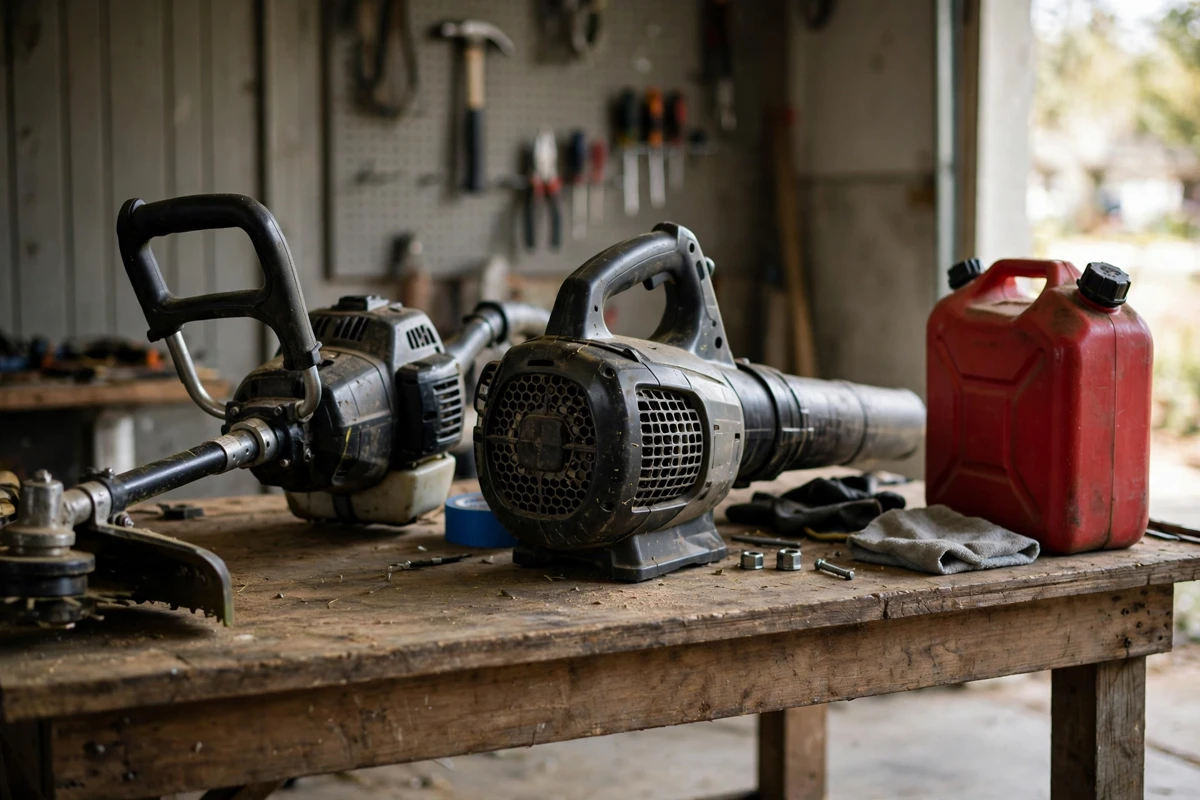
Mixed fuel does not keep forever. Most manufacturers treat about 30 days as the working life of a home mixed batch, or up to about 90 days when a fuel stabilizer is added at mixing time. Old fuel is a common cause of hard starting and rough running, so mix amounts you will actually use, and dispose of stale fuel through a local hazardous waste service.
A few handling habits keep mixing safe. Mix outdoors or in a ventilated space, away from sparks, pilot lights and anything hot, and never smoke near fuel. Keep the can closed and upright, stored away from living areas and out of reach of children, and wipe up spills straight away. Let a hot engine cool before refueling, and fill the tank with the tool on the ground rather than on a truck bed, because a static spark can ignite fuel vapor.
Common Mixing Mistakes
- Guessing the oil amount. A splash from the bottle can be half the oil the engine needs or twice as much. Damage from too little oil is fast and permanent, so measure every time.
- Using the ratio from a different tool. A household with a 50 to 1 trimmer and a 40 to 1 older saw needs two labeled cans, not one compromise mix.
- Putting oil in the tool tank. Mixing belongs in a fuel can, where oil and gasoline can blend before the engine drinks them.
- Running straight gasoline by accident. A two stroke engine on unmixed fuel has no lubrication and can seize in well under a minute of hard work. This is why labeled cans matter.
- Using stale fuel. Months old mixed fuel gums carburetors and makes starting miserable. Small fresh batches beat one big old batch.
- Adding extra oil to be safe. More oil than specified is not extra protection. It fouls plugs, builds carbon and blocks exhaust screens.
FAQs
Conclusion
A 50 to 1 mix comes down to two numbers: 2.56 fluid ounces of oil for every gallon of gasoline, and 20 milliliters for every liter. The 50 to 1 gas oil mix calculator at the top of this page handles any amount in between, and the chart covers the batch sizes most people mix. Measure the oil, mix it in a labeled can, use fresh gasoline, and your tools will get exactly the lubrication they were built for.
Read More: