
Wheel Fitment Calculator: Offset, Poke, Inset and Tire Size Guide
Compare your current wheels and tires with a new setup side by side, and see exactly how offset, size and tire choice change the fit before you spend any money.
Current Setup
New Setup
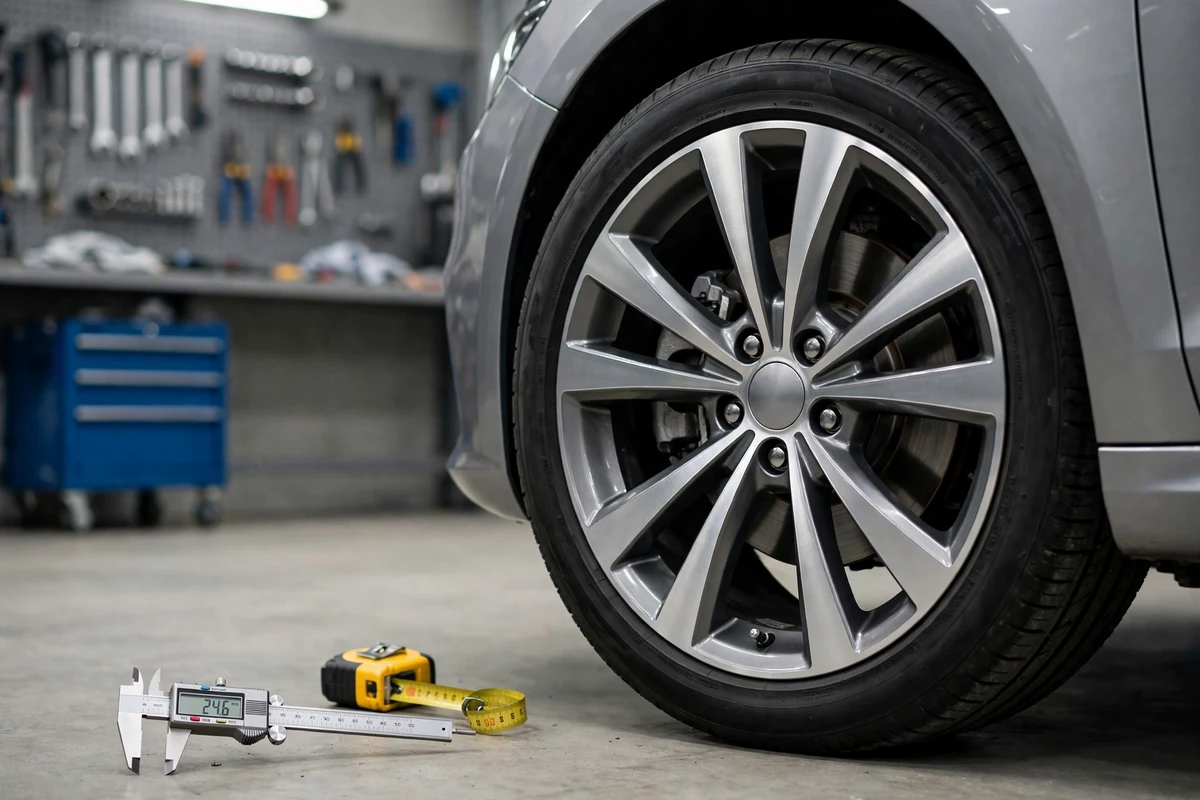
A wheel fitment calculator compares two wheel and tire combinations the setup on your car now and the one you are thinking of buying — and works out how the new setup will sit in the wheel arch. It calculates the overall tire diameter, how far the wheel sticks out (poke), how far it sits inward (inset), and what happens to your ride height and speedometer reading. Instead of guessing from photos of other people’s cars, you get the differences in millimetres, so you can judge whether a wider wheel, a lower offset or a taller tire will clear your fenders and suspension or cause problems.
Fitment matters because a wheel can have the right bolt pattern and still be wrong for the car. Too much poke and the tire rubs the fender on bumps; too much inset and the rim or sidewall can touch the strut or spring. A change in overall diameter also alters your true speed at a given speedometer reading. Two minutes with the numbers is far cheaper than returning wheels that almost fit.
What Is Wheel Fitment and Why Does It Matter?
Wheel fitment describes where a wheel and tire end up positioned once they are bolted to the car: how much of the tire sits inside the arch, how close it runs to the suspension on the inside, and how much room remains to the fender lip on the outside. It is decided by four things working together — the tire size, the wheel width, the wheel diameter and the offset (ET).
Getting it right is not only about looks. Correct fitment keeps the tire clear of bodywork and suspension through the full range of steering and suspension movement, and keeps the speedometer and gearing close to factory behaviour. This is why a wheel fitment calculator looks at the whole combination rather than a single number: changing only the tire, or only the offset, shifts several clearances at once, and the safe answer comes from the total change.
How to Use the Wheel Fitment Calculator
Using the tool takes less than a minute, and you only need the markings already printed on your tires and the specifications of the wheels you are considering:
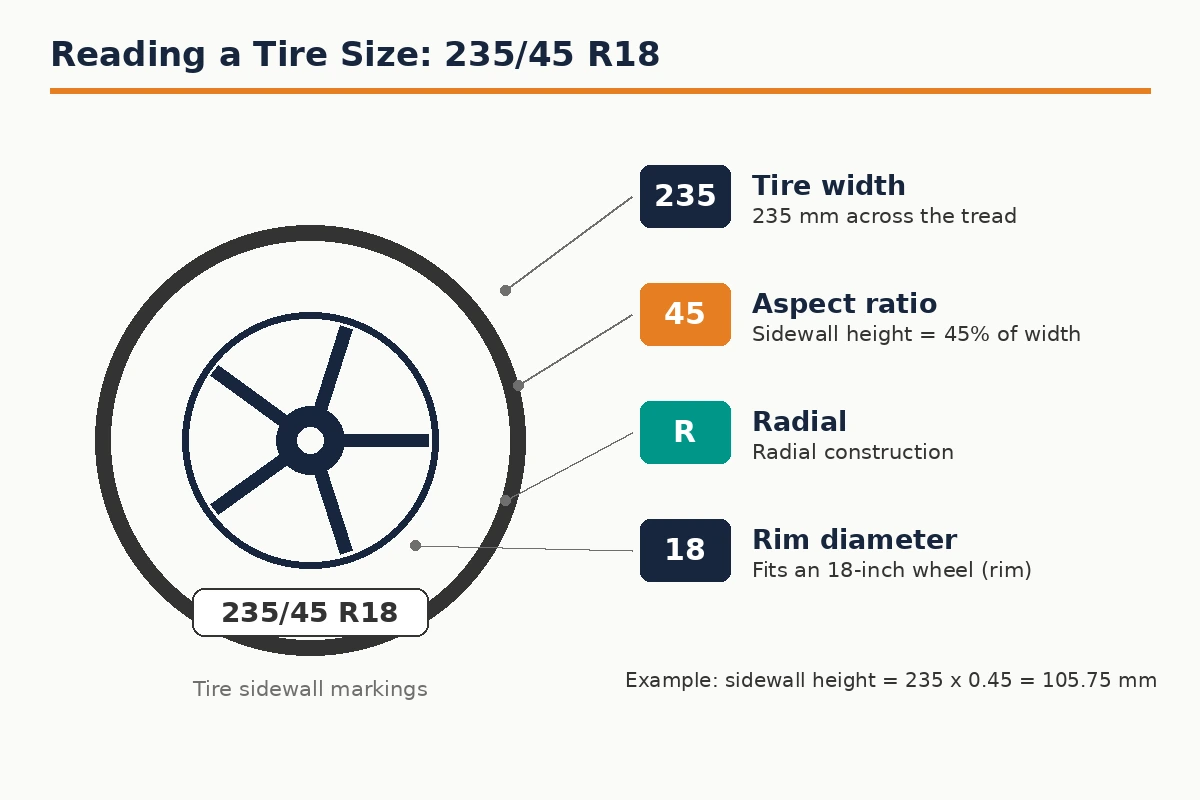
- Find your current tire size on the sidewall — for example 235/45R18 — and note your current wheel width and offset, such as 8.5 inches and ET45. The offset is usually stamped on the back of the wheel or listed in the owner’s manual. The three-part tire code itself is the same one a tire size calculator decodes when it turns a size into a sidewall height and an overall diameter.
- Enter the current setup on the left side: tire width, aspect ratio, rim diameter, wheel width and offset.
- Enter the new setup on the right side in the same way.
- Read the comparison. The calculator shows the change in overall diameter, poke, inset, ride height and speedometer reading between the two setups.
- Judge the result against the safe ranges explained below — roughly within 3% overall diameter, close to the factory offset, and with clearance left on both sides — before you buy anything.
The Inputs Explained: Tire Width, Aspect Ratio, Rim Diameter, Wheel Width and Offset (ET)
Tire width is the first number in a tire size, measured in millimetres across the tread: the “235” in 235/45R18. A wider tire extends the sidewall further on both sides of the rim, which uses up clearance inside and outside at the same time.
Aspect ratio is the second number — the sidewall height expressed as a percentage of the width. In 235/45R18 the sidewall is 45% of 235 mm, which is 105.75 mm. This is the number people most often get wrong: a wider tire with the same aspect ratio has a taller sidewall, so the overall diameter grows even though the rim size has not changed.
Rim diameter is the last number, in inches — the “18” in R18. It is the diameter of the wheel the tire mounts on, not the diameter of the complete wheel and tire.
Wheel width, also in inches, is measured between the inner edges of the rim flanges. Width spreads the tire’s sidewalls apart and moves both the outer lip and the inner barrel: an extra inch of width at the same offset pushes each side out by about half an inch.
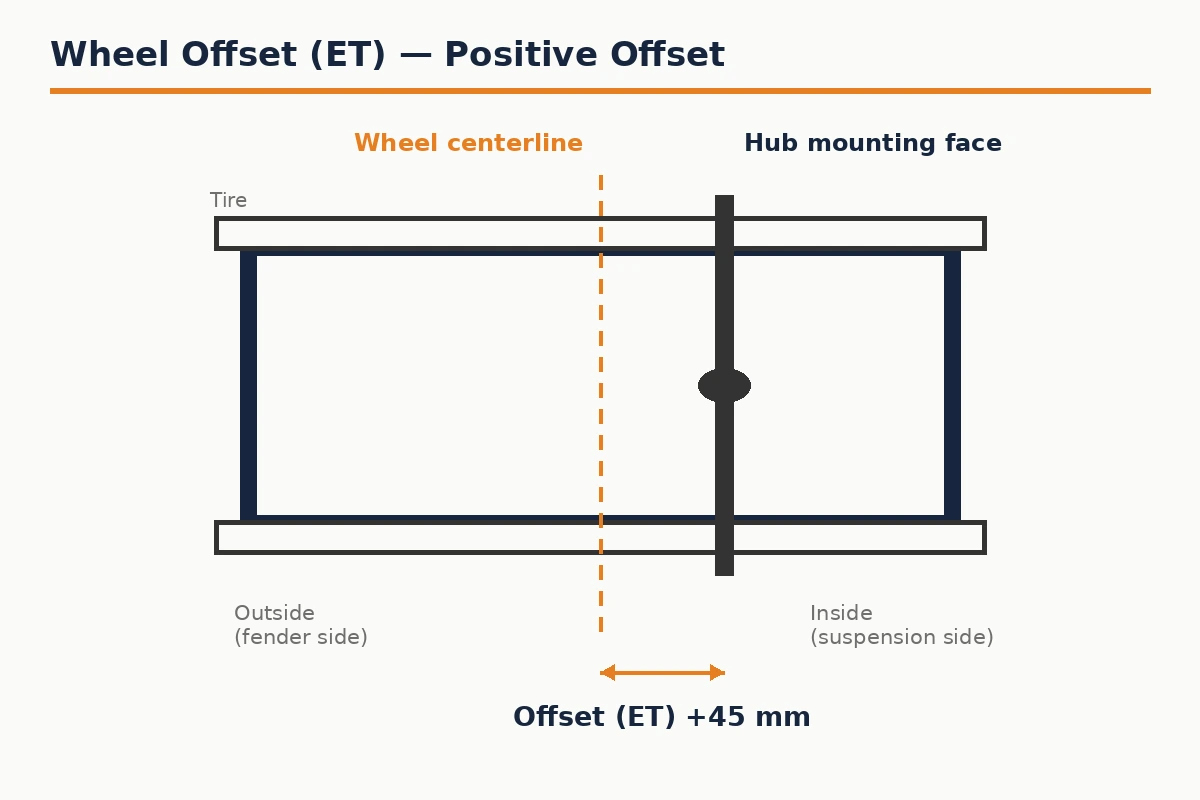
Offset (ET) is the distance, in millimetres, between the wheel’s hub mounting face and its centreline. A higher positive ET tucks the wheel further under the car; a lower or negative ET pushes it outward. Offset is the single most powerful fitment adjustment, because it moves the entire wheel and tire in or out without changing their size.
Key Fitment Terms: Offset, Poke, Inset, Backspacing and Overall Diameter
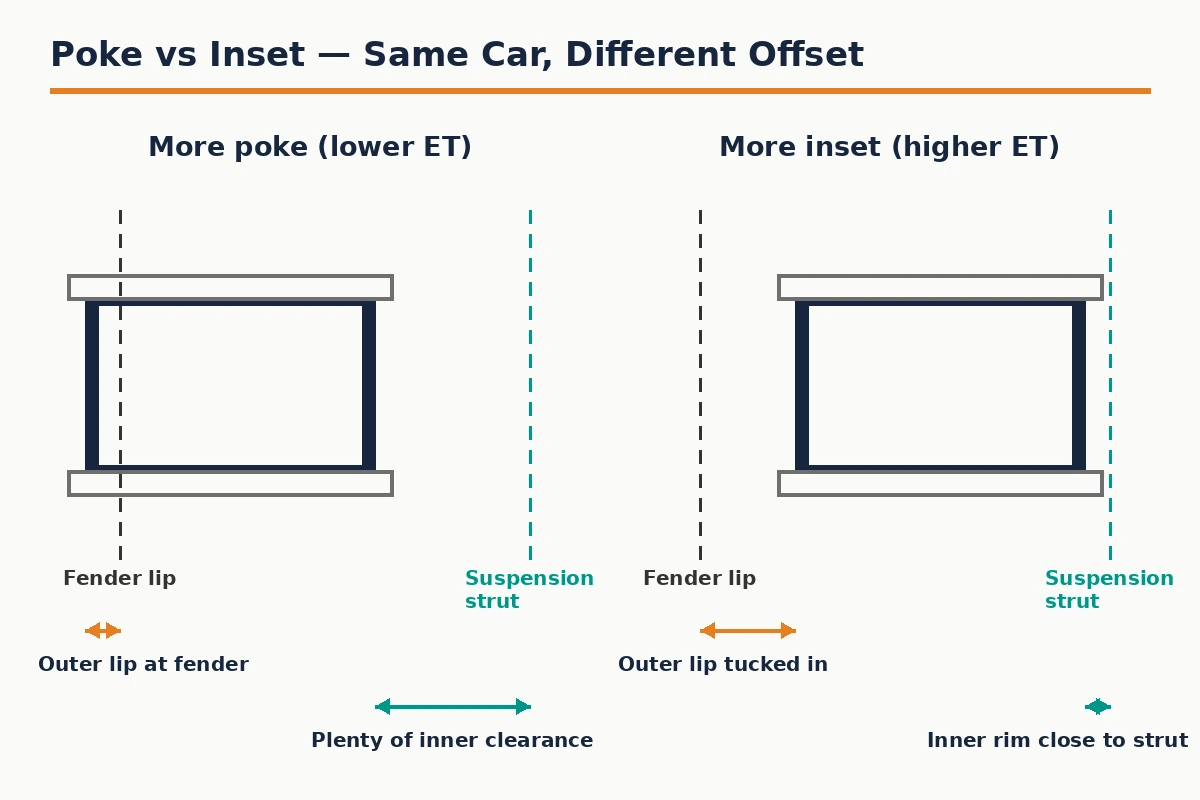
Poke is how far the outer face of the wheel sits from the hub mounting surface, measured outward. More poke means the wheel sits closer to — or beyond — the fender lip. It is the number that decides whether a setup looks tucked, flush or sticking out.
Inset is the opposite measurement: how far the wheel extends inward from the mounting face toward the suspension. More inset means the inner barrel runs closer to the strut or spring, which is where most serious clearance problems happen.
Backspacing is related to inset but measured to the very back edge of the rim rather than from the centreline; it is the traditional way of expressing inner clearance on older and American wheels. Both describe the same side of the wheel, measured from different points.
Overall diameter is the full height of the mounted tire, from ground to tread top. It decides ride height (half of any diameter change), fender gap and speedometer accuracy. Rim diameter alone does not set ride height — a larger wheel with a lower-profile tire can match the overall diameter of the setup it replaces.
Wheel Fitment Formulas
Every result the calculator shows comes from five short formulas. Wheel dimensions are converted from inches to millimetres first, using 1 inch = 25.4 mm.
Sidewall height = tire width × (aspect ratio ÷ 100)
The height of the tire’s sidewall in millimetres. For 235/45, this is 235 × 0.45 = 105.75 mm.
Rolling (overall) diameter = (rim diameter × 25.4) + (2 × sidewall height)
The rim’s diameter in millimetres, plus one sidewall at the top and one at the bottom.
Circumference = overall diameter × π
The distance the tire travels in one full revolution, which is what links diameter changes to speedometer error.
Poke = (wheel width × 25.4 ÷ 2) − offset (ET)
Half the wheel’s width in millimetres, minus the offset. A smaller ET gives a larger poke figure.
Inset = (wheel width × 25.4 ÷ 2) + offset (ET)
The same half-width, plus the offset, giving the inward reach of the rim.
Speedometer correction: actual speed = indicated speed × (new overall diameter ÷ current overall diameter). A smaller new diameter means the car travels slower than the speedometer shows; a larger one means it travels faster than shown.
Worked Example: Comparing Two Real Setups
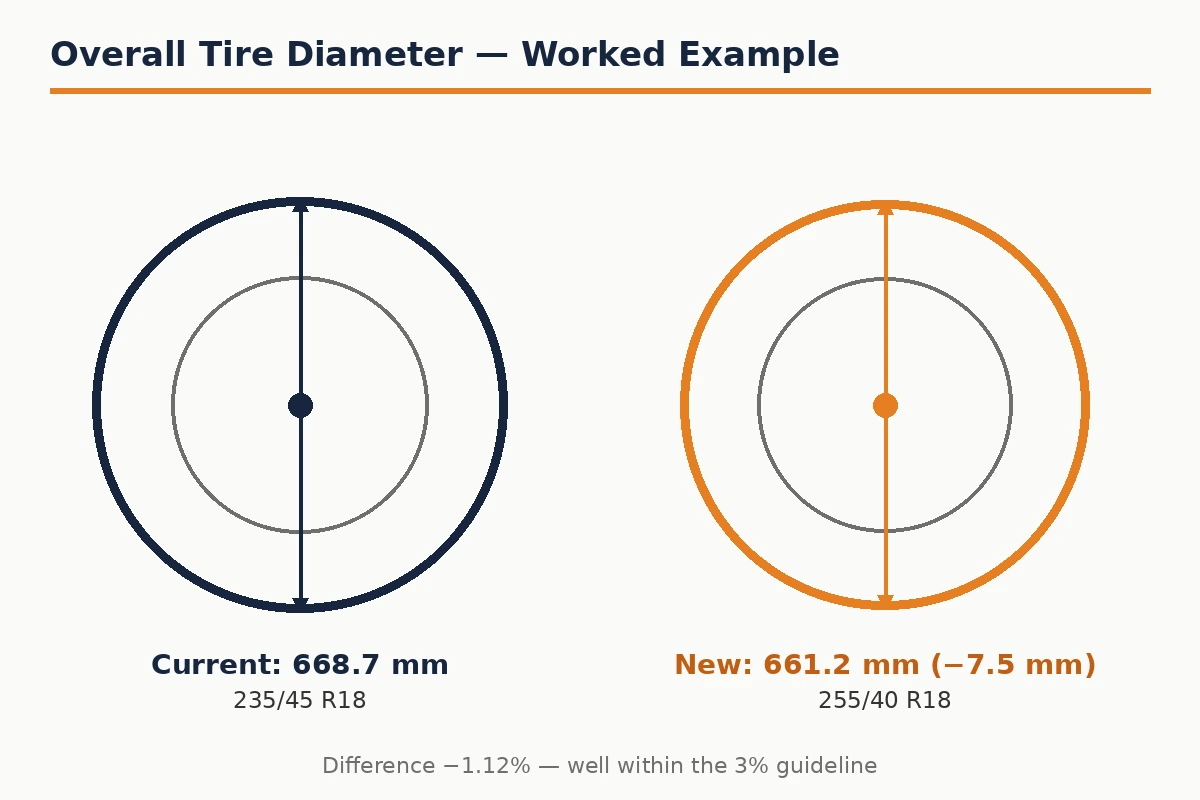
Take a common upgrade. The current setup is an 18×8.5 wheel with ET45 and a 235/45R18 tire. The new setup is a wider 18×9.5 wheel with ET35 and a 255/40R18 tire. Running both through the formulas above:
- Sidewall height: current 235 × 0.45 = 105.75 mm; new 255 × 0.40 = 102 mm.
- Overall diameter: current (18 × 25.4) + (2 × 105.75) = 668.7 mm; new (18 × 25.4) + (2 × 10²) = 661.2 mm. The new tire is 7.5 mm shorter overall, a change of −1.12%, comfortably inside the usual 3% guideline.
- Poke: current (8.5 × 25.4 ÷ 2) − 45 = 62.95 mm; new (9.5 × 25.4 ÷ 2) − 35 = 85.65 mm. The new wheel’s outer face sits 22.7 mm further out — a noticeably more flush look, and the figure to check against your fender clearance.
- Inset: current (8.5 × 25.4 ÷ 2) + 45 = 152.95 mm; new (9.5 × 25.4 ÷ 2) + 35 = 155.65 mm. The inner rim moves 2.7 mm closer to the suspension, which is small but worth confirming if clearance was already tight.
- Ride height: half the diameter change, so the car sits 3.75 mm lower.
- Speedometer: with the slightly smaller tire, an indicated 60 mph is a true speed of about 59.3 mph (60 × 661.2 ÷ 668.7).
The lesson here is that width and offset did most of the work: the tire change alone was unremarkable, but combined they moved the outer face out by almost 23 mm while barely affecting the inside.
Common Fitment Changes and What They Do
| Change | Outer side (fender) | Inner side (suspension) | Overall diameter |
|---|---|---|---|
| Wheel width +1 inch, same offset | Outer lip moves ~12.7 mm (0.5″) further out | Inner barrel moves ~12.7 mm (0.5″) closer | No change |
| Offset −10 mm (lower ET) | Wheel moves ~10 mm (0.39″) further out | Inner clearance increases by ~10 mm | No change |
| Offset +10 mm (higher ET) | Wheel tucks ~10 mm further in | Inner clearance decreases by ~10 mm | No change |
| Tire 20 mm wider, same aspect ratio | Sidewall extends ~10 mm further out | Sidewall extends ~10 mm further in | Increases, because the sidewall also grows taller |
How Much Change Is Safe?
There is no single number that fits every car, but three checks cover most situations. First, keep the overall tire diameter within about 3% of the factory size; beyond that, speedometer error, gearing changes and fender-gap problems grow quickly. Second, treat staying within about 5 mm of the factory offset as a conservative starting point — larger changes often work, but they demand a proper clearance check rather than a rule of thumb. If offset is the only variable changing, a dedicated wheel offset calculator isolates that single shift on its own, making it easier to judge before you run the full comparison. Third, remember what no calculator can check for you: the bolt pattern (PCD) and the centre bore must match your car exactly, or the wheel will not mount correctly at all, whatever the fitment numbers say.
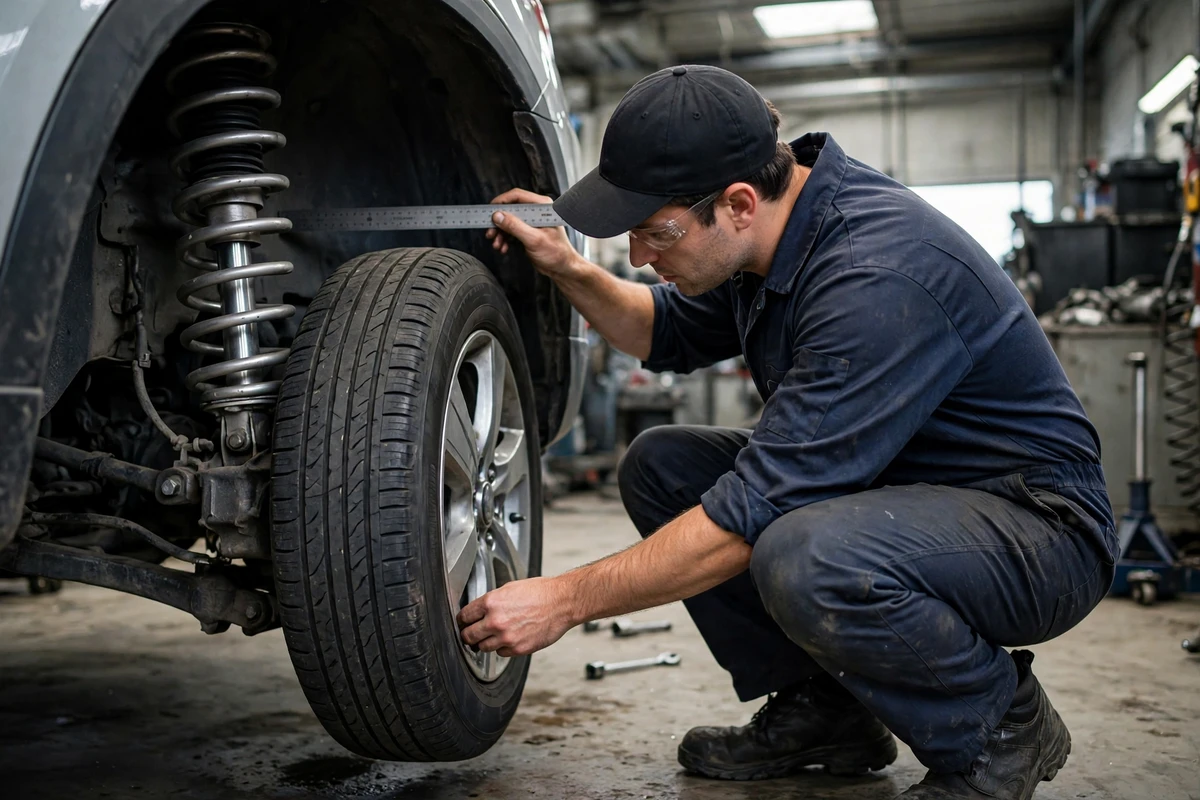
Finally, treat every result as a geometric estimate. Before committing, verify the real clearances on the car itself — turn the steering to full lock in both directions and think about suspension compression and droop, because a setup that clears in a straight line on a lift can still touch on the road.
Common Wheel Fitment Mistakes
- Judging by rim size alone. An 18-inch wheel with a tall tire can be bigger overall than a 19-inch wheel with a low-profile tire. Always compare overall diameter, not rim diameter.
- Forgetting that wider tires are taller tires. At the same aspect ratio, a wider tire has a taller sidewall, so a “same profile” upgrade quietly grows the diameter.
- Changing width and offset in the same direction. A wider wheel with a much lower offset stacks both changes on the outer side and is the classic route to fender rubbing.
- Ignoring the inner side. Poke gets the attention, but inset is what puts the rim into the strut. Check both numbers every time.
- Trusting the estimate over the car. The calculation assumes standard tire shapes; actual section widths vary between tire models, so leave a sensible margin rather than fitting to the last millimetre.
FAQs
Yes. You can compare as many current and new setups as you like, in millimetres or inches, without paying or signing up.
ET is the offset, shortened from the German word Einpresstiefe. It is the distance in millimetres between the hub mounting face and the centreline of the wheel. A higher ET tucks the wheel further in; a lower or negative ET pushes it outward.
They do different jobs. Width spreads the wheel equally on both sides of its centreline, while offset moves the whole wheel in or out. To fix a clearance problem on one side only, offset is usually the more useful adjustment; to fit a wider tire, width creates the room.
Staying within about 3% of the factory overall diameter is the commonly used guideline. Inside that range, speedometer error stays small — around 1 mph at 60 mph for a 1% change, as the worked example above shows.
No. It gives accurate geometric estimates for diameter, poke and inset, but it cannot check your bolt pattern or centre bore, and it cannot account for your car’s exact suspension and fender shapes. Use it to narrow the choice down, then confirm clearances on the car at full steering lock and full suspension travel.
As a general guide, tires around 225–235 mm are the natural match for an 8-inch-wide rim. Much narrower and the sidewall looks stretched; much wider and it bulges, which can soften steering response.
Conclusion
Fitment stops being a gamble once you can see the numbers. Compare the diameter, poke and inset of any new setup against what is on the car today, keep the diameter change small, and confirm the clearances the calculator cannot see — and the wheels you order will be the wheels that fit.