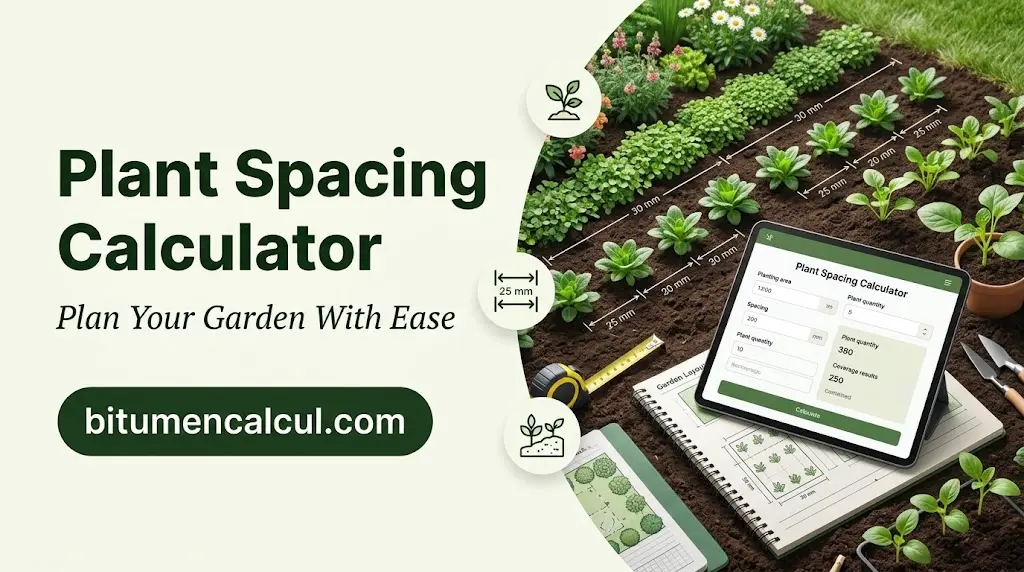
Plant Spacing Calculator Plan Your Garden With Ease
Plant Spacing Calculator
Find out how many plants fit in your garden bed, field, or planting area.
Number of rows
–
Plants per row
–
Row spacing used
–
Space per plant
–
Bed area
–
Plant density
–
Unused space (length side)
–
Unused space (width side)
–
Layout preview
Each green dot is one plant.
A well-planned garden starts with knowing how many plants you need and how much space they will cover. The Classy Groundcovers Plant Calculator makes it easier to estimate plant quantities, determine appropriate spacing and calculate the coverage area for a given number of plants. Whether you are designing a new groundcover bed, planting along a garden border or managing your landscaping budget, it helps you plan your purchases with greater accuracy.
Understanding the Classy Groundcovers Plant Calculator

The Classy Groundcovers Plant Calculator is a practical online tool for working out planting quantities, spacing and ground coverage. You only need to enter two of the three key values area, plant spacing or the number of plants required to estimate the missing measurement. It also supports square and triangular planting patterns, allowing you to compare how different layouts distribute plants across your garden.
Using a plant spacing calculator gives you a more reliable starting point than guessing how many plants to buy. Keep in mind that the final quantity may depend on the shape of the planting area, the growth characteristics of the selected groundcover and its recommended spacing.
Key Inputs for Accurate Planting Estimates

To get a useful result from the Classy Groundcovers Plant Calculator, you need to understand three basic measurements and how they affect your planting plan.
- Planting area (square feet): The total ground surface you want to cover. For a rectangular space, multiply its length by its width.
- Plant spacing (inches): The distance from the centre of one plant to the centre of the next. Closer spacing generally requires more plants, while wider spacing reduces the initial quantity.
- Plant quantity: The number of plants you already have or intend to purchase. This value helps estimate how much ground they can cover.
The calculator also includes an edge-distance measurement, which helps determine how far the first row of plants should sit from the garden boundary. This is useful when planning a more even layout and distributing plants consistently across the available space.
How Plant Spacing Affects Groundcover Growth
Choosing the right distance between plants can influence your initial landscaping costs and how quickly the ground becomes covered. Planting closer together usually requires a larger number of plants but may help fill gaps sooner. Wider spacing lowers the upfront plant count, though it can take longer for the groundcover to spread and create a continuous appearance.
Before finalising your planting layout, check the recommended spacing for your chosen species. The Classy Groundcovers website is a useful place to review individual plant details and spacing recommendations so you can make calculations that better suit your garden.
How to Work Out Plant Quantity, Spacing and Ground Coverage
The Classy Groundcovers Plant Calculator lets you plan a planting project using whichever measurements you already know. By entering two values planting area, spacing or plant quantity you can estimate the third. This flexibility makes it useful for garden beds of different sizes, whether you are planning a small border or a larger groundcover installation.
1. Calculate the Number of Plants Required
When you know the size of your garden bed and the spacing you want to maintain, you can estimate how many plants to purchase.
How to calculate your plant requirements:
- Measure the length and width of the planting area in feet.
- Multiply these measurements to find the total area in square feet.
- Enter the calculated area into the plant calculator.
- Specify the desired spacing between plants in inches.
- Compare the estimated quantities for square and triangular planting patterns.
Example: Consider a garden bed measuring 100 square feet, with plants spaced 12 inches apart.
Under a square planting arrangement, each plant occupies approximately one square foot. This gives an estimated requirement of 100 plants, before accounting for additional plants, boundary adjustments or irregular sections of the garden.
A triangular arrangement distributes plants differently and can accommodate more plants within the same area when the centre-to-centre spacing remains unchanged.
2. Determine Plant Spacing Within Your Budget
If you have already decided how many plants to buy, the calculator can help you estimate suitable spacing for your available area.
Suppose you have 150 plants for a 200-square-foot garden bed. Enter the area and plant quantity to obtain the estimated spacing for both square and triangular layouts.
This method is particularly useful when working with an existing plant order or a fixed landscaping budget. However, spacing should also reflect the mature spread and growth rate of your chosen groundcover. Plants positioned farther apart may take longer to fill the gaps between them.
3. Calculate How Much Ground Your Plants Can Cover
If you already have a supply of groundcover plants, you can use the calculator to estimate the area they will cover at your chosen spacing.
Enter the number of plants available and the intended distance between them. The calculator provides estimated coverage for square and triangular planting patterns.
For example, if you have 300 plants and plan to space them 8 inches apart, the coverage estimate will vary according to the selected arrangement.
Use the result to assess whether your existing supply is sufficient or whether you need to purchase more plants. Bear in mind that these estimates assume a reasonably regular layout. Garden paths, curved edges and other obstacles can reduce the space available for planting.
4. Compare Square and Triangular Planting Layouts
The Classy Groundcovers Plant Calculator supports two common planting arrangements. Understanding the difference helps you select a layout that suits your garden's design and coverage requirements.
| Feature | Square planting | Triangular planting |
|---|---|---|
| Plant arrangement | Straight rows and columns | Alternating, staggered rows |
| Layout style | Regular grid | Offset grid |
| Space utilisation | Standard grid arrangement | Denser distribution at the same nominal spacing |
| Suitable application | Neat, orderly planting layouts | Denser groundcover installations |
In a square pattern, plants are positioned at regular intervals in both directions. In a triangular pattern, alternate rows are shifted sideways, allowing plants to sit more closely together relative to the surrounding gaps.
At the same centre-to-centre spacing, a triangular arrangement uses approximately 86.6% of the area per plant required by a square grid. Under ideal conditions, this allows roughly 15.5% more plants to fit into the same area.
5. Account for Edge Distance When Planning Your Layout
Edge distance is the gap between the garden boundary and the outer row of plants. One common planning method is to position the first row approximately half the chosen plant spacing from the edge.
For instance, if your plants are spaced 12 inches apart, a 6-inch edge distance can provide a balanced starting point. The appropriate measurement will depend on the finished border you want and how the calculator defines edge distance.
Before marking out your planting area, check the calculator's result and account for nearby paths, walls, kerbs and other boundaries. These adjustments help you develop a more practical planting layout and avoid relying on estimates that assume the entire area is available for plants.
Practical Planting Advice and Common Calculation Errors
Getting an accurate plant estimate is a good starting point, but successful groundcover planting also depends on choosing suitable plants, measuring the area correctly and allowing for local growing conditions. These practical considerations can help you turn the Classy Groundcovers Plant Calculator's results into a more reliable planting plan.
1. Match plant spacing to the selected species.
Groundcover varieties differ in their growth rates and spreading habits, so a single spacing measurement will not suit every plant. Check the recommended spacing for your chosen species before entering a value into the Classy Groundcovers Plant Calculator. Closer spacing generally encourages quicker coverage but increases the initial plant requirement, while wider spacing can help reduce upfront costs.
2. Include a reasonable allowance for extra plants.
Consider allowing an additional 5–10% above your calculated quantity to account for irregular boundaries, small gaps and potential losses during establishment. This is a general planning suggestion, not a fixed requirement for every project. The appropriate allowance will depend on the condition and shape of the planting area.
3. Divide irregular areas into manageable sections.
Garden beds do not always have straight, rectangular boundaries. For an L-shaped area, divide the bed into smaller rectangles, calculate each section's area and add the results together. Remember to subtract paths and other spaces that will not contain plants so your estimate reflects the actual planting area.
4. Take local growing conditions into account.
Sunlight, temperature, soil moisture and the length of the growing season can all influence how quickly groundcovers establish and spread. According to the official calculator's guidance, groundcovers in northern regions may take longer to fill an area because their growing seasons are shorter. Consider your local conditions when planning the expected time to achieve coverage.
5. Prepare the ground before planting.
Removing unwanted weeds and preparing the soil to suit the selected species can help establish a suitable growing environment. Follow the plant-specific preparation and care recommendations rather than assuming every groundcover requires the same conditions. The Classy Groundcovers website is a useful starting point for finding relevant planting information.
Common Plant Spacing Calculation Mistakes to Avoid
Even a reliable calculator depends on the accuracy of the measurements you enter. Watch out for these common errors when planning your garden:
- Mixing measurement units: Convert feet and inches correctly before calculating the area or entering plant spacing.
- Ignoring mature plant size: Do not base your spacing decision solely on the size of a plant's current pot. Consider its expected spread and recommended planting distance.
- Treating every bed as a rectangle: Divide irregular spaces into smaller sections to obtain a more realistic area estimate.
- Forgetting unplanted spaces: Exclude paths, borders and other obstacles from the total planting area where appropriate.
- Expecting guaranteed coverage times: A calculated plant quantity does not guarantee that the groundcover will fill the area within a particular period.
The Classy Groundcovers Plant Calculator provides estimates for planting quantities, spacing and coverage. The final results in your garden will still depend on the selected species, planting arrangement, ongoing care and environmental conditions.
FAQs
Final Advice for Planning Your Groundcover Garden
A successful planting plan begins with accurate measurements and a clear understanding of your garden's needs. Measure the area, confirm the recommended spacing for your chosen groundcover and use the Classy Groundcovers Plant Calculator to estimate the number of plants required. Factor in the shape of the bed and your expectations for how quickly the plants should spread.
By balancing plant quantities, spacing and your available budget, you can make more informed purchasing decisions and create a planting layout that suits your landscaping goals.
Read More: