
Food Cost Calculator Price Menus Smarter & Boost Your Profits
| Ingredient | Qty Used | Unit | Purchase Price | Purchase Qty | Cost | Remove |
|---|
Supy’s free Food Cost Calculator is designed to make menu pricing easier for food businesses. It helps you work out both your current and ideal food cost for each menu item by considering ingredient prices, quantities, and other key details. Whether you prefer a Food cost calculator excel sheet for tracking costs or want to understand the Food cost calculator formula, this tool can support more accurate pricing decisions that protect your margins while keeping your menu competitive.
Why Restaurant Owners Rely on This Calculator

Designed for practical kitchen costing, this tool removes the guesswork often associated with spreadsheets and manual calculations.
Accurate Dish Costing
Add each ingredient along with its quantity and unit price, and the calculator works out the exact cost per portion. It gives you a clearer picture of what every dish actually costs to prepare.
Instant Price Recommendations
Find out the selling price required to reach your target food cost percentage without doing the calculations by hand. Understanding the Food cost calculator formula also makes it easier to see how your target percentage affects menu pricing.
Protect Your Profit Margins
Check the expected gross profit for each dish before adding it to your menu. This helps prevent underpricing and gives you better control over your restaurant’s margins.
Export PDF Cost Reports
Generate a clean recipe costing report and export it as a PDF. You can then share the information with your kitchen team, investors, or accountant whenever needed.
Automatic Unit Conversion
There’s no need to convert measurements manually. Whether you purchase ingredients in kilograms and use them in grams or buy litres and portion them by cups, the calculator handles the conversion automatically.
Multi-Currency Support
The tool supports USD, GBP, EUR, PKR, AED, INR, CAD, AUD, and more than 10 additional currencies. Choose the currency you use and start calculating your costs right away. For businesses that prefer spreadsheet tracking, the results can also complement a Food cost calculator excel setup.
How to Use the Menu Cost Calculator
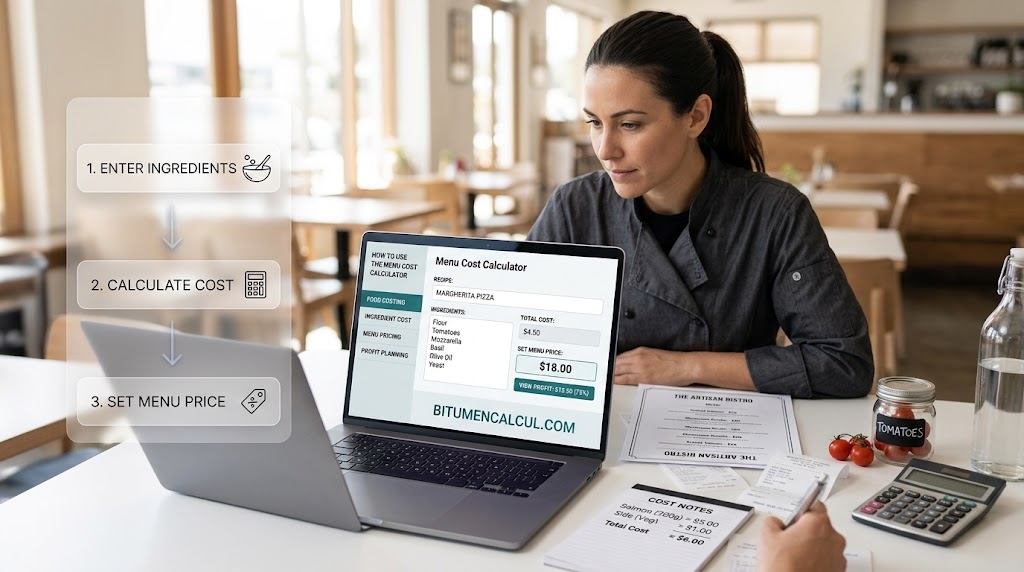
Calculate the cost of any menu item in four straightforward steps. It takes less than two minutes, and there’s no signup needed.
1. Name Your Dish
Start by entering the name of the menu item you want to cost, such as Chicken Alfredo, Margherita Pizza, or Beef Burger.
2. Set Your Currency and Selling Price
Select your preferred currency, enter the current selling price of the dish, and specify your target food cost percentage. These figures help the calculator determine suitable pricing.
3. Add All Ingredients
Enter each ingredient with its name, bulk purchase price, unit, quantity used for one portion, and the unit used in the recipe. Accurate inputs are essential for reliable results and can also help when checking a Food cost calculator formula.
4. Check Your Results
Your results appear instantly, showing the total ingredient cost, actual food cost percentage, recommended selling price, and gross profit for each dish. You can also use these figures when maintaining a Food cost calculator excel sheet for ongoing cost tracking.
What You Can Do With Our Food Cost Calculator
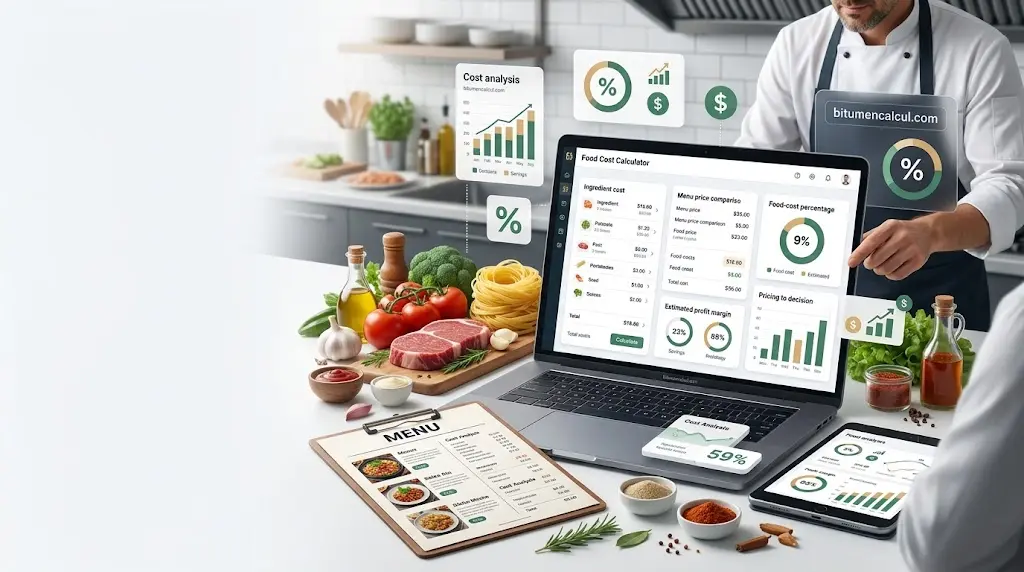
Our calculator lets you enter every ingredient in a dish, along with its quantity and purchase price, to calculate the total food cost accurately. With this Restaurant food cost calculator free tool, you can see a clear breakdown of each ingredient and identify which items have the biggest impact on your dish cost. As a practical Food cost calculator for restaurant use, it also shows your actual food cost percentage and estimated profit, while giving you the option to export the results as a PDF for easy record-keeping.
How to Interpret Your Food Cost Calculator Results
There isn’t one perfect food cost percentage for every restaurant. Your ideal target depends on the type of restaurant you operate, the dishes you serve, and the pricing strategy behind them. Higher-priced speciality items may support larger margins, while everyday menu items often need a different approach.
As a general reference, many dishes fall within a food cost range of around 20% to 35%. A Simple food cost calculator can help you monitor these figures clearly, while a Food cost calculator monthly review can reveal longer-term changes in ingredient expenses and profitability.
If Your Food Cost Percentage Is Above 35%
Review Ingredient Costs: Look closely at the cost of each ingredient and identify products that are pushing the dish cost higher. You may be able to reduce expenses by comparing suppliers or finding suitable alternatives without lowering quality.
Check Portion Sizes: Inconsistent or oversized portions can quickly increase food costs. Make sure serving sizes remain consistent and consider whether expensive ingredients can be used more efficiently without affecting the dish.
Review Your Menu Pricing: High-cost dishes should be priced with their ingredient expenses in mind. Check whether your current selling prices are providing enough margin while still remaining competitive.
If Your Food Cost Percentage Is Below 20%
Check Ingredient Quality: A very low food cost can sometimes indicate that ingredient quality has been reduced. Make sure lower costs aren’t affecting the standard of your dishes or the experience customers receive.
Review Your Pricing Strategy: A low food cost percentage isn’t automatically a sign that your pricing is optimal. Compare ingredient costs with selling prices to determine whether your dishes could be priced more effectively.
Evaluate Supplier Relationships: Lower purchasing costs can be useful, but choosing suppliers solely because they are cheaper may affect quality or reliability. A slightly higher ingredient cost can be worthwhile when it supports consistent quality and customer satisfaction.
FAQs
Conclusion
A food cost calculator gives restaurant owners a clearer view of ingredient expenses, menu pricing, and potential profit. By tracking portions, reviewing food cost percentages, and adjusting prices when needed, you can make smarter pricing decisions, protect your margins, and keep your menu financially sustainable.
Read More: